
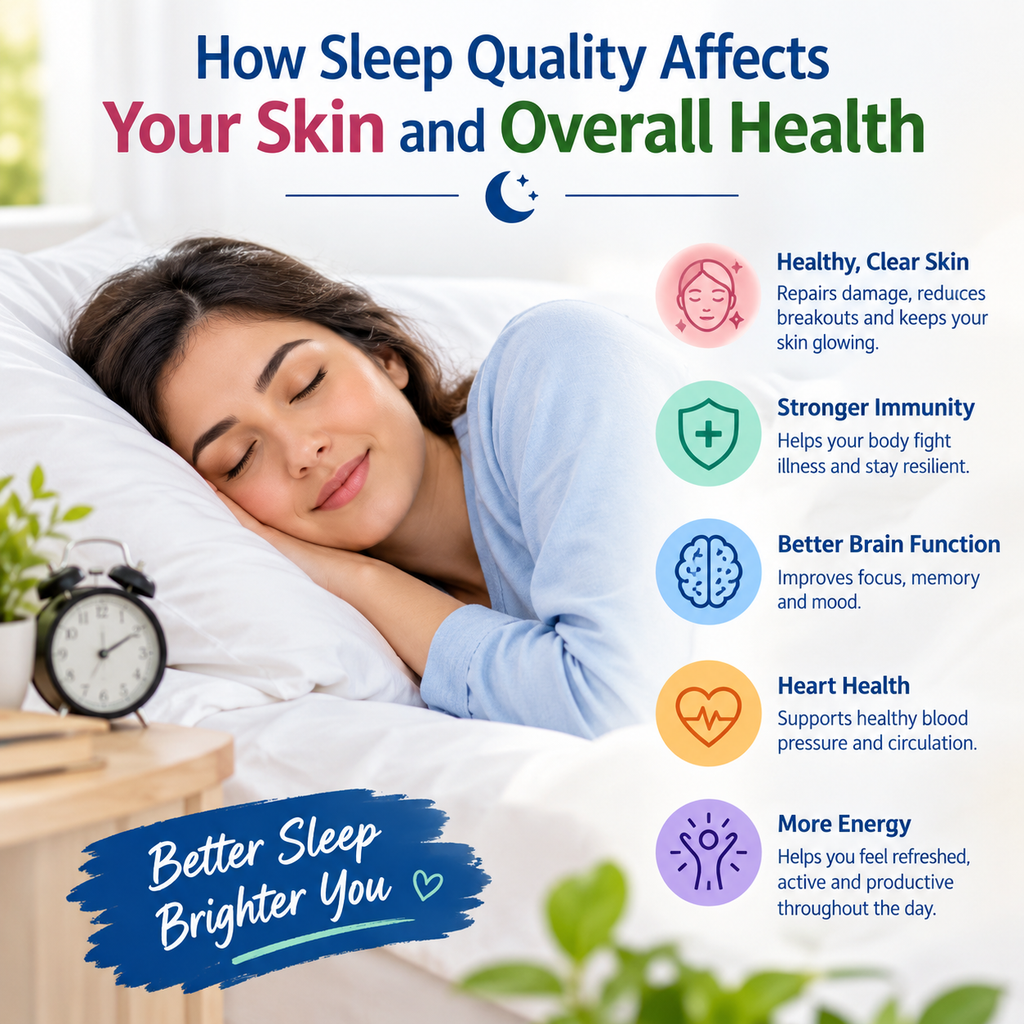
Sleep is one of the most important factors in maintaining a healthy body and glowing skin. While many people focus on skincare products, healthy eating, and exercise, they often overlook the importance of getting enough quality sleep. A good night’s rest allows the body to recover, repair damaged cells, regulate hormones, and support essential biological functions. When sleep becomes irregular or insufficient, its effects can gradually appear on the skin and influence overall physical and mental well-being.
Understanding the relationship between Skin and Overall Health can help you develop healthier habits and make better lifestyle choices. Quality sleep supports skin hydration, elasticity, and natural repair processes while helping maintain a strong immune system, balanced mood, and healthy metabolism. On the other hand, poor sleep may contribute to dull skin, dark circles, increased stress, and a greater risk of certain long-term health problems.
By improving your sleep routine and adopting a balanced lifestyle, you can support your skin from within while promoting better health. This article explores how sleep quality affects your skin, why rest is essential for the body, and which practical habits can help you achieve healthier-looking skin and improved well-being.
1. How Sleep Supports Natural Skin Repair
Your skin is constantly exposed to environmental stressors, including sunlight, pollution, temperature changes, and everyday irritants. During sleep, the body continues its natural repair and maintenance processes. Adequate rest supports tissue recovery, cellular functions, and the regulation of processes involved in maintaining the skin’s protective barrier.
When you sleep well, your body has an opportunity to recover from daily stress. Healthy sleep patterns also support the normal production and regulation of hormones involved in tissue maintenance. These processes help the skin retain its ability to protect the body against moisture loss and external irritants.
However, consistently sleeping too little may interfere with skin barrier function and contribute to dryness, reduced radiance, and a tired appearance. Research suggests that poor sleep quality is associated with signs of skin aging and slower recovery from environmental damage.
Although sleep cannot replace a proper skincare routine, it is an important part of maintaining healthy skin. Combining sufficient rest with gentle cleansing, moisturizing, and sun protection can help you maintain a healthier complexion.
2. The Connection Between Sleep and Skin Aging
Premature skin aging is influenced by several factors, including genetics, sun exposure, smoking, nutrition, stress, and sleep quality. While aging is a natural process, certain lifestyle habits can affect how quickly visible signs develop.
During restful sleep, the body carries out essential maintenance activities that support normal tissue function. Poor sleep may increase physiological stress and affect processes associated with inflammation and oxidative stress. Over time, these effects may contribute to changes in the skin’s appearance.
People who regularly experience inadequate sleep may notice more pronounced under-eye shadows, puffiness, fine lines, and a lack of brightness. Sleep deprivation can also make facial expressions appear more tired because the eyes and surrounding tissues may show visible signs of fatigue.
Getting seven to nine hours of sleep each night is a useful general target for most adults. However, individual needs can vary depending on age, health, and lifestyle. Consistency matters as much as duration, so maintaining regular sleeping and waking times can help support your body’s natural rhythm.
In addition, protecting your skin from excessive sun exposure, eating nutrient-rich foods, and avoiding smoking can complement the benefits of quality sleep.
3. How Poor Sleep Affects Skin Hydration and Appearance
Healthy skin depends on an effective protective barrier that helps retain moisture and defend against irritants. Sleep quality can influence the body’s ability to maintain this barrier, which may affect skin hydration and appearance.
When you do not get enough restorative sleep, your skin may appear less fresh and feel drier or more sensitive. Some people also notice increased puffiness around the eyes, uneven-looking skin tone, and a dull complexion after several nights of insufficient rest.
Sleep-related changes in stress hormones and inflammatory activity may contribute to these effects. However, skin problems can have many causes, including dehydration, allergies, weather conditions, medications, and underlying skin disorders.
To support skin hydration, drink enough water throughout the day, use a moisturizer suited to your skin type, and avoid excessively hot showers or harsh cleansing products. A balanced diet containing healthy fats, vitamins, minerals, and protein can also support normal skin function.
Remember that expensive skincare products cannot fully compensate for consistently poor sleep. A combination of appropriate skincare, healthy nutrition, and sufficient rest is a more sustainable approach to maintaining a healthy complexion.
4. Sleep, Stress and Hormonal Balance
Stress and sleep are closely connected. When you experience ongoing stress, falling asleep and staying asleep may become more difficult. At the same time, inadequate sleep can make it harder to manage emotions and respond effectively to everyday challenges.
Poor sleep can influence the regulation of cortisol, a hormone involved in the body’s stress response. When stress levels remain elevated, some people experience changes in their skin, including increased oiliness, sensitivity, or flare-ups of existing conditions such as acne or eczema.
Sleep does not directly cause every skin problem, and hormonal changes are only one part of the picture. Nevertheless, establishing a healthy sleep routine can help reduce one potential source of stress on the body.
Try incorporating relaxing activities into your evening, such as reading, taking a warm shower, practicing gentle stretching, or doing a short breathing exercise. Reducing caffeine intake later in the day and limiting stimulating activities before bedtime may also improve sleep quality.
If stress or persistent sleep difficulties begin affecting your daily life, consider discussing them with a qualified healthcare professional.
5. The Relationship Between Sleep and Immune Health
Your immune system protects your body against infections and helps regulate inflammatory responses. Quality sleep plays an important role in supporting immune function, allowing the body to maintain and coordinate its natural defense mechanisms.
During sleep, the immune system carries out several essential activities involving immune cells and signaling molecules. Consistently inadequate sleep can interfere with these processes and may make it more difficult for the body to respond effectively to certain infections.
Sleep is also relevant to skin health because the skin acts as the body’s first physical barrier against many external threats. Maintaining this barrier and supporting immune function are important parts of the broader relationship between Skin and Overall Health.
People with inflammatory skin conditions may find that stress and poor sleep coincide with worsening symptoms. However, the relationship varies from person to person, and sleep improvements should not be considered a cure for chronic skin diseases.
For better immune support, prioritize regular sleep, balanced meals, physical activity, and recommended vaccinations. If you have recurring infections, persistent inflammation, or unexplained skin changes, seek medical advice rather than relying on sleep improvements alone.
6. Herbal Supplements for Granuloma Annulare and Skin Wellness
Many people interested in improving their skin explore natural remedies and supplements alongside their usual skincare routines. Search terms such as Herbal Supplements for Granuloma Annulare reflect this interest in plant-based approaches to skin wellness.
Granuloma annulare is a skin condition characterized by raised, often ring-shaped bumps. It is generally not contagious, and some cases resolve without treatment. However, the condition can persist or recur, so a healthcare professional should evaluate unusual or ongoing skin changes.
It is important to understand that there is currently insufficient reliable clinical evidence to establish that herbal supplements can treat or cure granuloma annulare. Although certain plant-derived compounds are being studied for their potential effects on inflammation, laboratory findings do not automatically demonstrate that a supplement is safe or effective for a specific skin condition.
Anyone considering supplements should speak with a qualified healthcare professional, particularly if they take prescription medicines, have an underlying medical condition, or are pregnant or breastfeeding. Herbal products can cause side effects and interact with medications.
A healthy sleep schedule, nutritious diet, and appropriate medical care can support general well-being, but they should not replace evidence-based treatment for a diagnosed skin condition.
7. The Role of Herbal Care Products in a Healthy Skincare Routine
Interest in Herbal Care Products has grown as consumers look for skincare options containing botanical extracts, plant oils, and other naturally derived ingredients. These products may appeal to people who prefer a simple skincare routine, but natural ingredients are not automatically safer or more effective than synthetic alternatives.
Some botanical ingredients can provide moisturizing or soothing benefits when appropriately formulated. However, certain essential oils, fragrances, and plant extracts can irritate the skin or trigger allergic reactions, especially in people with sensitive skin.
When choosing skincare products, pay attention to the ingredient list and select products that suit your skin type. Fragrance-free moisturizers and gentle cleansers are often useful options for individuals prone to irritation. Testing a new product on a small area of skin before regular use can help identify possible reactions.
It is also important to remember that skincare products work best as part of a broader wellness routine. Adequate sleep, sun protection, a balanced diet, and stress management all contribute to maintaining healthy skin.
If you have a persistent rash, unusual bumps, or a diagnosed skin disorder, consult a dermatologist before using herbal remedies as an alternative to prescribed care.
8. How Sleep Quality Influences Mental Health and Energy
The benefits of quality sleep extend well beyond the skin. Sleep is essential for memory, concentration, emotional regulation, and physical recovery. When you consistently sleep poorly, you may experience daytime fatigue, difficulty focusing, irritability, and reduced motivation.
Insufficient sleep can also affect how the brain processes emotions. Everyday challenges may feel more difficult, and stress may become harder to manage. These effects can influence relationships, work performance, exercise habits, and other aspects of daily life.
Quality sleep also supports the body’s energy regulation. When you are well rested, it may be easier to maintain regular physical activity, prepare nutritious meals, and follow healthy routines. Conversely, fatigue can make these habits more challenging.
For most adults, aiming for seven to nine hours of sleep each night is a reasonable starting point. Create a calm sleeping environment by keeping the bedroom dark, quiet, and comfortable. Avoid heavy meals close to bedtime if they disrupt your sleep, and establish a relaxing routine that signals to your body that it is time to rest.
If you regularly feel exhausted despite getting sufficient sleep, seek medical advice to investigate possible causes.
9. Practical Ways to Improve Sleep Quality Naturally
Improving sleep quality does not always require major lifestyle changes. Small, consistent adjustments can help you develop a healthier relationship with rest.
Maintain a consistent schedule. Go to bed and wake up at approximately the same time every day, including weekends. Regular timing helps support your body’s internal clock.
Create a relaxing bedtime routine. Spend the final 30 to 60 minutes before bed doing calming activities. Reading, gentle stretching, or listening to relaxing sounds may help you unwind.
Limit caffeine later in the day. Coffee, tea, energy drinks, and some other products contain caffeine that can interfere with sleep. Consider reducing your intake during the afternoon and evening.
Make your bedroom comfortable. Keep the room dark, quiet, and cool enough for comfortable sleep. Use bedding that suits your preferences.
Get regular physical activity. Walking, cycling, and other forms of exercise can support sleep and general health. Choose a schedule that works for you, avoiding intense exercise close to bedtime if it makes falling asleep difficult.
Get appropriate daylight exposure. Spending time outdoors during the day can help regulate your sleep-wake cycle.
Seek help for persistent sleep problems. Frequent insomnia, loud snoring, gasping during sleep, or ongoing daytime sleepiness may indicate a condition that requires professional evaluation.
These habits can support better rest and contribute to healthier skin and improved physical and mental well-being.
Conclusion
Sleep quality is an essential part of a healthy lifestyle, influencing the body’s recovery processes, immune function, emotional balance, and skin condition. Consistently getting enough restorative sleep may help support skin hydration, maintain the skin barrier, and reduce the tired appearance associated with sleep deprivation. It also promotes concentration, energy, and the ability to manage everyday stress.
Understanding the relationship between Skin and Overall Health highlights why skincare should extend beyond topical products. A comprehensive approach includes regular sleep, balanced nutrition, exercise, stress management, sun protection, and appropriate medical care.
Although interest in Herbal Supplements for Granuloma Annulare and Herbal Care Products continues to grow, it is important to distinguish general wellness practices from treatments supported by clinical evidence. Herbal products may not be suitable for everyone, and supplements should never replace professional evaluation or established treatment for a skin condition.
Ultimately, healthy skin begins with consistent self-care. By prioritizing sleep and adopting sustainable daily habits, you can support your body’s natural functions and work toward better skin health and overall well-being.