
Dates have been eaten in India for centuries — in Ramzan iftars, in winter laddoos, in new-mother diets, and as a quick sweet after lunch. They are one of the oldest cultivated fruits in the world, and they have earned their place in the Indian kitchen. The benefits of eating dates daily are real, but they are also easy to exaggerate. Dates are not a medicine, and they are not a free food — they are sweet, and the sugar in them is real sugar. This article explains what dates actually give you, how many to eat, the best time to eat them, and who should be careful.
The quick answer: 2 to 4 dates a day is a sweet spot for most adults. That gives you natural energy, fibre, potassium, magnesium, and a little iron, for about 130 calories. Dates are one of the best natural replacements for refined sugar, they help with constipation, and they are a useful food for people who feel tired or low on energy. But if you eat 10 dates a day thinking they are a health food with no downside, the sugar adds up fast.
What Is in a Date? The Benefits of Eating Dates Daily Start Here
One Medjool date — about 24 grams — has roughly 66 calories, 18 grams of natural sugar, 1.6 grams of fibre, and small amounts of potassium, magnesium, iron, and vitamin B6. The smaller, drier dates common in Indian markets have a little less sugar per piece, but the picture is the same: dates are mostly natural sugar and fibre, with minerals on the side.
The fibre is what makes dates different from a spoonful of sugar. That fibre slows down how fast the sugar enters your blood, so a date does not spike your energy the way a biscuit does. Dates also have antioxidants — polyphenols that protect your cells from damage. Dates have no fat, no cholesterol, and no sodium. They are naturally gluten-free. They are also one of the few sweet foods that give you potassium in a meaningful amount — one date has about 160 mg, and potassium helps your muscles and your blood pressure.
Benefits of Eating Dates Daily: What They Actually Do
Quick, steady energy. Dates are mostly glucose and fructose, which your body can use fast. That makes them a good pre-workout snack or a quick pick-me-up in the afternoon. Unlike a chocolate bar, the fibre in dates means the energy lasts a bit longer and the crash is gentler.
Help with constipation. This is one of the best-proven benefits. Dates have soluble fibre, and soaking them overnight makes them even gentler on the stomach. Eating 2 to 3 soaked dates in the morning helps many people with regular bowel movements. It is a simple, food-based fix — not a laxative, and not a cure for chronic constipation, which needs a doctor.
Support for low iron. Dates have a small amount of iron — about 0.3 mg per date. That is not a lot on its own, and dates alone will not fix anaemia. But as part of a diet with dal, leafy greens, and vitamin C foods, dates help. The site’s guide on iron deficiency in Indian women explains which foods actually move your haemoglobin and how to pair them with vitamin C for better absorption. If you are low on iron, dates are a helper, not a treatment — get your levels tested. NIH Office of Dietary Supplements has a fact sheet on iron needs, food sources, and absorption.
Better than refined sugar. If you have a sweet tooth, replacing sugar in your chai or dessert with a chopped date is a genuine upgrade. You get fibre, potassium, and antioxidants along with the sweetness, instead of empty calories. Dates are still sugar, though — the goal is to use less sweetness overall, not to eat unlimited dates because they are natural.
What dates do not do: they do not cure diabetes, they do not detox your body, they do not whiten skin, and they are not a weight-loss food. They are a healthy sweet — and the word healthy does not mean unlimited.
Benefits of Eating Dates Daily: How Many Dates to Eat?
For most adults, 2 to 4 dates a day is the right amount. That is about 130 to 260 calories, which fits easily into a normal day. For children, 1 to 2 dates a day is enough. For very active people or athletes, 4 to 6 dates a day is reasonable, especially around workouts. For older adults, 2 to 3 dates a day is a good amount — they are soft, easy to chew, and easy to digest.
The mistake is treating dates like a free health food. Ten dates have about 660 calories and 180 grams of sugar — roughly the same sugar as two cans of cola. Nobody would drink two colas and call it healthy. Count your dates, at least at first, until you know what 3 dates looks like.
How to Eat Dates: 4 Easy Ways
Soaked dates. Soak 2 to 3 dates overnight in water. Eat them in the morning with the water. Soaking softens them and makes them easier to digest. This is the best method for constipation.
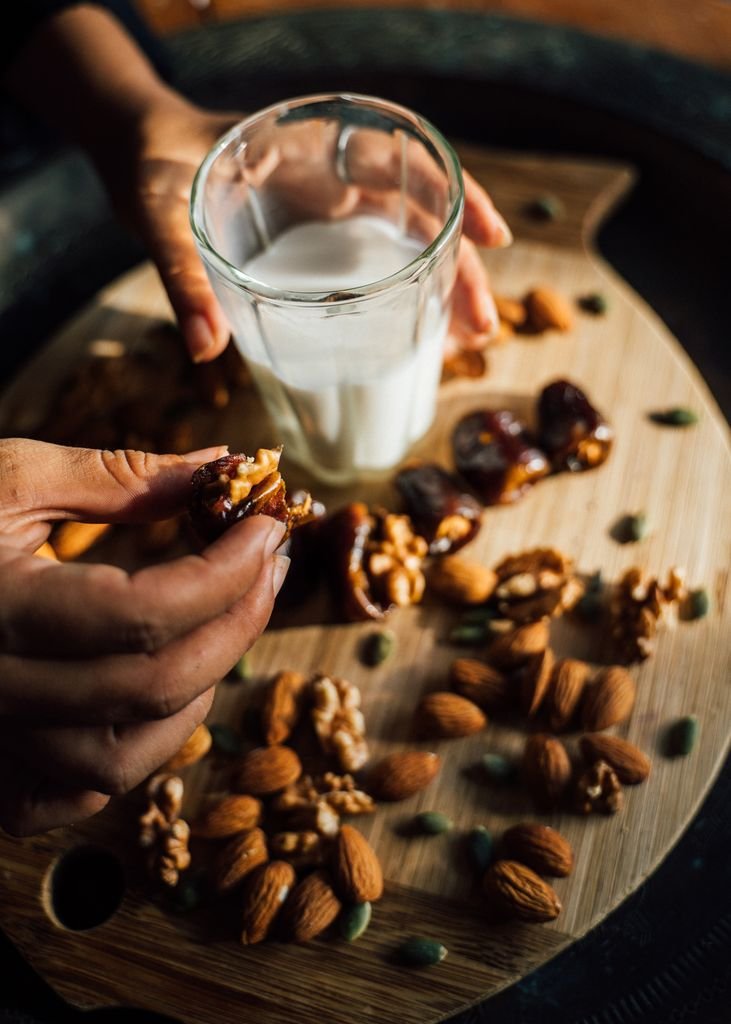
Dates with milk. Blend 2 dates with a glass of warm milk and a pinch of elaichi. This is a classic bedtime drink in many Indian homes — filling, warm, and much better than a packaged health drink.
Dates with sattu. If you drink sattu sharbat, sweeten it with a chopped date instead of jaggery or sugar. The site’s guide on sattu benefits for weight loss explains how to make the drink and how much sattu to use. Dates and sattu together make a high-protein, high-fibre drink that keeps you full for hours.
Stuffed dates. Remove the seed and fill the date with a little peanut butter or a whole almond. This is a good pre-workout snack or a dessert for guests — it looks fancy, it takes two minutes, and it is far better than a sweet from a shop. You can also chop dates into oats, porridge, or laddoos instead of sugar. A few soaked almonds with your dates make a balanced snack with protein, vitamin E, and healthy fats — the site’s guide on soaked almonds benefits for brain explains how many to eat and how to soak them.
Who Should Avoid or Limit Dates?
People with diabetes should be careful. Dates have a medium glycaemic index — about 47 to 55 — which is lower than white bread but still meaningful. One or two dates a day may be fine for many people with diabetes, especially with nuts or curd, but it depends on your sugar levels and medicine. Check with your doctor and test your blood sugar after eating them.
Buy dates that are soft, glossy, and free of white sugar crystals on the surface — crystals usually mean the dates are old or stored badly. A kilo of decent dates costs ₹200 to ₹400, and at 3 dates a day, a kilo lasts more than a month. Store dates in an airtight jar in a cool, dry place, and in summer keep them in the fridge.

Frequently Asked Questions
Q1. What are the benefits of eating dates daily?
Dates give quick energy, fibre that helps constipation, potassium, magnesium, and a little iron. They are a better sweet than refined sugar. Two to four dates a day is the right amount for most adults.
Q2. How many dates should I eat per day for the benefits of eating dates daily?
Two to four dates a day is enough for most adults. Children can have 1 to 2. More than 6 a day adds a lot of sugar and calories without much extra benefit.
Q3. Is it good to eat dates on an empty stomach to get the benefits of eating dates daily?
Yes, soaked dates in the morning are gentle on the stomach and give steady energy. Pair them with milk or nuts so the meal has protein too.
Q4. Can diabetic patients eat dates and get the benefits of eating dates daily?
In small amounts — 1 to 2 dates a day, with nuts or curd — many people with diabetes can eat dates, but it depends on your sugar levels and medicine. Check with your doctor and test your blood sugar.
The Bottom Line on the Benefits of Eating Dates Daily
Dates are one of the simplest healthy sweets you can eat. Two to four a day gives you energy, fibre, and minerals for about ₹10. They are not a medicine and not a free food — they are sugar with benefits. Eat them soaked in the morning, or with milk and nuts in the evening, and let them replace the refined sugar in your day rather than adding to it. That is the honest way to enjoy them.
Disclaimer: This article is for general information only and is not medical advice. Food suggestions here are general guidance, not a prescription. If you have diabetes, kidney disease, or any medical condition, or you take regular medicine, consult your doctor before changing your diet.