
Iron deficiency symptoms women India experience are easy to miss, because they creep in slowly. Tiredness that you blame on a busy week. Hair fall that you blame on shampoo. Pale skin that you barely notice. Breathlessness climbing stairs that you put down to being unfit. Many Indian women live with low iron for months or years without realising it, because each symptom on its own seems ordinary. Together, they tell a different story.
Iron is needed to make haemoglobin, the part of red blood cells that carries oxygen around the body. When iron is low, less oxygen reaches muscles, brain, and skin, so energy, concentration, and stamina all drop. Indian women are at higher risk for several reasons: monthly blood loss, vegetarian diets that rely on plant iron, which the body absorbs less easily than iron from meat, and meals where tea or coffee is drunk with food. Knowing the symptoms, the foods that help, and when a blood test is needed can make a real difference.
Fatigue That Rest Does Not Fix
The most common symptom is fatigue — not the tiredness after a late night, but a heavy, persistent tiredness that does not lift after a full night’s sleep or a restful weekend. You may feel exhausted by mid-afternoon, struggle to get through a normal working day, or need a nap to function. Concentration can suffer too: reading, remembering details, and focusing on work feel harder than they used to.
Fatigue has many causes, from poor sleep to thyroid problems, so tiredness alone does not prove iron deficiency. But when fatigue comes with other signs in this article, iron is worth checking. Many women are surprised to learn that their “laziness” or “low energy” was actually low iron all along.
Hair Fall, Pale Skin, and Brittle Nails
Hair fall is one of the symptoms women notice first. Iron helps hair follicles grow, and when iron is low, more hair can enter the shedding phase. The result is more hair on the pillow, in the shower drain, and on the comb, and hair that feels thinner over time. Hair fall has many causes, including stress, thyroid problems, and low vitamin D, so it is not a diagnosis on its own — but it is a useful clue when it appears with fatigue.
Pale skin is another sign. Look at the inside of your lower eyelids, your lips, and your palms. If they look paler than usual, or if your face looks washed out even when you are well, low iron may be contributing. Brittle nails that break easily, or nails that become spoon-shaped with a dip in the middle, can also appear when iron has been low for a long time. These changes develop slowly, so comparing with old photos or asking a family member can help you notice them.
Breathlessness, Headaches, and a Racing Heart
When iron is low, the body has to work harder to deliver oxygen. That can show up as breathlessness during ordinary activity — climbing stairs, walking briskly, or carrying groceries — when it did not used to. Some women notice their heart beating faster than usual, or a pounding feeling in the chest during mild exertion. Frequent headaches, dizziness when standing up, and a feeling of light-headedness can also appear.
Other symptoms are less well known. Some women crave non-food items such as ice, clay, or chalk, a condition called pica. Others notice a sore tongue, cracks at the corners of the mouth, or restless legs at night. Cold hands and feet, even in warm weather, can also be a sign. None of these symptoms alone confirms iron deficiency, but several together are a good reason to get tested.
Why Iron Deficiency Is So Common in India
Iron deficiency symptoms women India face are linked to everyday patterns, not to a single cause. Monthly periods are a regular source of iron loss, and heavy periods increase that loss further. Pregnancy increases iron needs sharply, because iron is needed for both mother and baby. Vegetarian diets are common in India, and plant foods contain non-haem iron, which the body absorbs less efficiently than the haem iron in meat and fish. That does not mean a vegetarian diet cannot provide enough iron — it can, with the right foods and habits — but it needs more attention.
Tea and coffee also play a role. Many Indian households drink chai with or just after meals. Tea and coffee contain compounds that reduce iron absorption from the meal, especially from plant foods. Drinking chai an hour or two after a meal, rather than with it, allows more iron to be absorbed. Frequent use of antacids, certain medicines, and gut conditions that affect absorption can also contribute, which is another reason a doctor’s check matters.
Iron-Rich Indian Foods That Actually Help
The good news is that Indian kitchens are full of iron-rich foods. You do not need expensive imported foods. You need to eat these foods regularly, and to pair them well.
| Food | How to eat it | Notes |
|---|---|---|
| Ragi | Ragi porridge, ragi roti, ragi dosa | One of the richest Indian sources of iron and calcium |
| Leafy greens | Palak, methi, amaranth, sarson in dal or sabzi | Cook with lemon or tomato for better absorption |
| Dal and legumes | Masoor, moong, rajma, chole, lobia | Eat dal daily; sprouts add variety |
| Dates and raisins | 2–3 dates as a snack, or in porridge | A sweet, iron-rich snack; watch portions |
| Sesame and pumpkin seeds | Til in chutney or laddoo, seeds in curd or salads | Small amounts daily add up |
| Jaggery | A small piece after meals, or in place of sugar | Traditional source; still a sugar, so keep portions small |
| Bajra and jowar | Bajra roti, jowar roti, millet khichdi | Whole grains with more iron than white rice |
| Eggs and fish | Boiled egg, fish curry if you eat them | Haem iron, absorbed more easily |
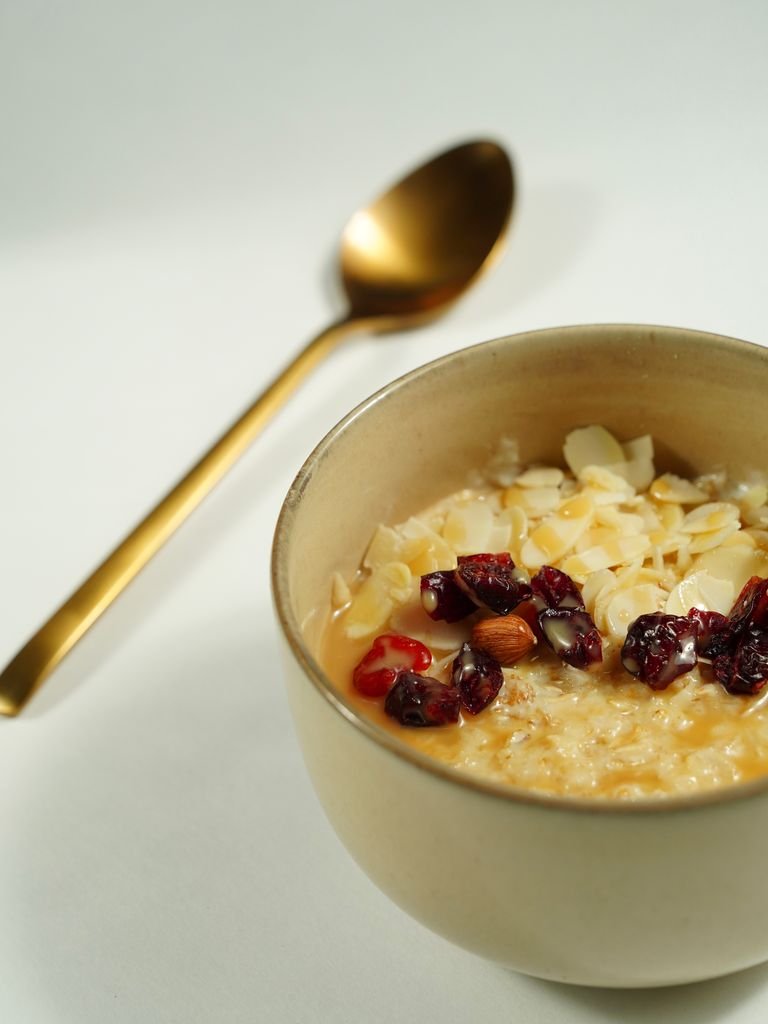
Ragi deserves a special mention. It is cheap, widely available, and rich in iron and calcium. A bowl of ragi porridge for breakfast, or ragi roti at lunch, is one of the simplest ways to add iron to a vegetarian diet. Palak and methi are similarly useful — a palak dal or methi thepla combines iron with vitamin C in the same meal, which helps absorption.
Vitamin C: The Key to Absorbing Iron
Iron from plant foods is absorbed poorly on its own — often only a small fraction reaches the bloodstream. Vitamin C changes that. It converts plant iron into a form the body can absorb more easily, and it can double or triple absorption from a meal.
That is why food pairing matters more than any single “superfood”. Add lemon juice to dal, sabzi, and salads. Eat amla, guava, orange, or tomato with an iron-rich meal. Cook palak with tomatoes, or have a bowl of sprouts chaat with lemon and chopped tomato. A glass of nimbu pani or a piece of guava after lunch is not just refreshing — it helps your body use the iron in that lunch.
Tea and Coffee Timing: A Small Change With a Big Effect
If you drink chai or coffee with your meals, this is the easiest habit to change. Wait at least one hour after a meal before drinking tea or coffee, and avoid drinking them with iron-rich foods. Morning chai before breakfast is less of a problem than chai taken with lunch or dinner, because there is less iron in that meal to block. If you love chai, keep it — just move it away from your main meals. The same applies to coffee and to very milky tea drunk in large amounts with food.
Calcium can also reduce iron absorption when taken in large amounts at the same meal, so avoid taking a calcium supplement or a large glass of milk at the exact same time as your main iron-rich meal, unless your doctor advises otherwise. Curd with lunch in normal amounts is fine; the issue is large doses of calcium taken together with iron.

When Supplements Are Needed — and Why a Blood Test Comes First
Food can prevent and correct mild iron deficiency, but it is slow. If iron is very low, or if you have symptoms such as breathlessness, a racing heart, or severe fatigue, food alone may not be enough, and a doctor may recommend an iron supplement. This is where a blood test is essential.
Do not start iron tablets based on symptoms alone. Too much iron is also harmful, and iron supplements can cause constipation, stomach pain, and dark stools. They can also mask other causes of anaemia, such as vitamin B12 deficiency or blood loss from the gut, which need different treatment. A doctor will usually order a blood test — often a haemoglobin test and a ferritin test, which measures iron stores — before deciding whether a supplement is needed, which type, and for how long.
If a doctor does prescribe iron, take it exactly as advised, and ask about timing: iron is usually absorbed better on an empty stomach with vitamin C, but it can upset the stomach, so your doctor may suggest a different timing. Do not stop early just because you feel better — iron stores take time to rebuild, and a follow-up test is usually needed. Keep iron tablets away from children, as they can be dangerous if swallowed accidentally.
See a doctor promptly if you have very heavy periods, blood in the stool, black stools, severe breathlessness, chest pain, or fainting. These need medical attention, not just dietary changes.
Frequently Asked Questions
What are the first iron deficiency symptoms women in India usually notice?
Fatigue that rest does not fix, hair fall, pale skin, and breathlessness on stairs are often the first signs. They develop slowly and are easy to blame on stress or a busy life, which is why they are often missed.
Can I get enough iron from a vegetarian Indian diet?
Yes, with attention. Ragi, leafy greens, dal, dates, sesame seeds, and millets are all good sources. Pair them with vitamin C — lemon, amla, guava, or tomato — and keep tea and coffee away from meals to improve absorption.
Should I take iron supplements without a blood test?
No. Get a blood test first. Iron supplements are not suitable for everyone, too much iron can be harmful, and low haemoglobin can have other causes that need different treatment. A doctor can decide whether a supplement is needed and for how long.
The Bottom Line
Iron deficiency symptoms women India live with — fatigue, hair fall, pale skin, breathlessness — are common, but they are not normal and they are not something to accept. Ragi, dates, sesame, leafy greens, and dal, paired with vitamin C and with tea kept away from meals, form a strong food-first foundation. And when symptoms are severe, or food alone is not enough, a blood test before supplements is the right next step. Iron is one of the most fixable deficiencies there is, once it is recognised.
Disclaimer: This article is general information only and is not medical advice. It does not replace advice from a qualified doctor. See a doctor for diagnosis or before starting a supplement or treatment, especially if you have heavy periods, breathlessness, or severe fatigue.