
Protein for Indian vegetarians is often lower than people think. Most Indian vegetarians do not eat too little food, yet still fall short on protein. A plate with rice, dal and one vegetable is full and satisfying, but it is often not balanced. The result is not hunger, but slowly declining strength — low energy, slow recovery after exercise, weaker muscles and hair shedding, says dietician and sports nutritionist Niyati P. Desai.
Protein is not just an athlete’s concern. It is the nutrient your body uses to build and repair muscles, bones, skin and hair, support the immune system and carry oxygen in your blood.
This is a simple Indian vegetarian protein guide for people who want to work out, lose weight, feel more energetic or simply want to become stronger. It tells you how much protein you need, which Indian vegetarian foods provide it, how to organise the day without meat or protein powder, and which mistakes to avoid.
Why Protein Matters More Than Calories
Protein builds and repairs muscles and tissues and is important for maintaining strength and bone health.
Protein controls hunger for longer: it helps to ensure a full stomach and steady energy levels.
Protein supports the immune system and healing: antibodies and enzymes are made of protein.
Protein matters for your appearance too: your hair, skin and nails are built largely from protein. For another Indian food that supports gut health alongside protein, see Millets for Gut Health: Ragi, Jowar and Bajra — Benefits, Recipes and Who Should Avoid Them.
Protein for Indian Vegetarians: How Much Do You Actually Need?
The ICMR recommends 0.83 g per kg of body weight per day as the baseline, with a higher target for active people. That does not mean all protein is the same. Each complete protein includes all nine essential amino acids in sufficient amounts, while many plant proteins are incomplete. A 60 kg individual needs 50–66 g protein daily with no extra activity and 72–96 g if they’re active. A 70 kg individual needs 58–77 g with no extra activity and 84–112 g if they’re active. A 80 kg individual needs 66–88 g daily with no extra activity and 96–128 g if they’re active. Those with those targets also want to lose fat without losing muscle, so they need the higher end. Use this simple formula: body weight in kg × 1.3 ≈ daily protein in grams — only if you are active and want to build or protect muscle.
The Problem With the Indian Vegetarian Plate
Many Indian families eat plenty of calories, but their diet falls short on protein. A typical vegetarian plate has too much refined carbohydrate, such as white rice, maida rotis and potatoes, and too little protein. It often has a small bowl of watery dal, sometimes just in the form of gravy, and a vegetable with barely any protein. It is also high in oil and salt.
A smarter plate is simple: your protein source at the centre of the plate; 1 small bowl of dal or a paneer/tofu/soya dish; and half the plate fill with vegetables and salad.
When your main proteins include soya, paneer, and dairy, include them alongside seasonal vegetables to balance the plate.
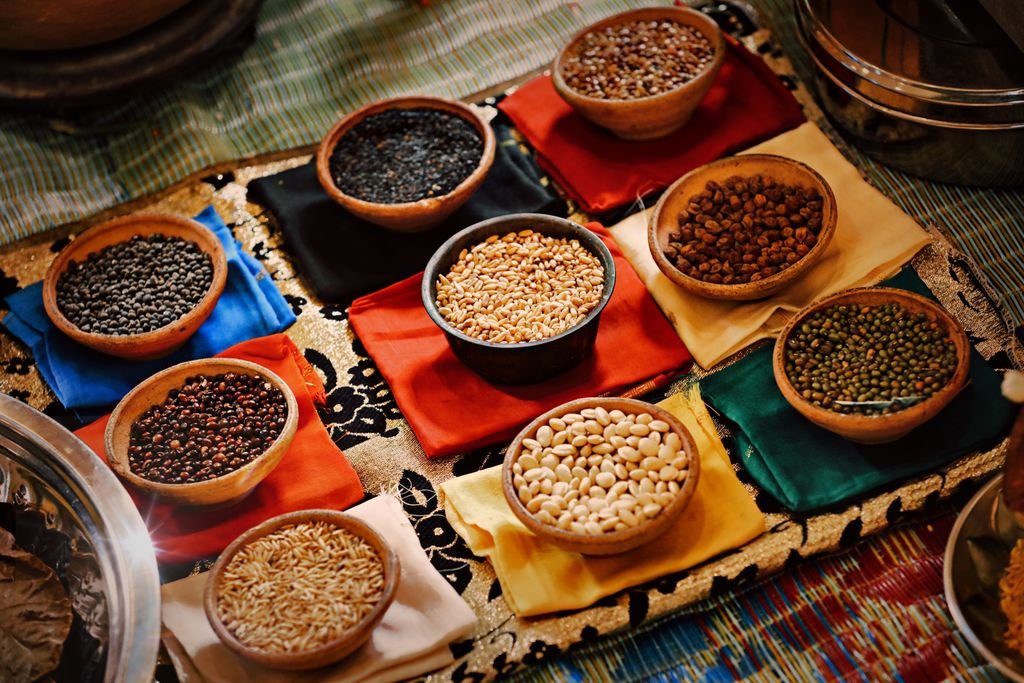
The 18 Best Protein Sources for Indian Vegetarians
These foods are easy to buy, easy to cook and cover different meals:
- Moong dal: 24 g protein per 100 g dry — easy to digest, good for khichdi and chilla.
- Masoor dal: 25 g per 100 g dry.
- Chana: 20 g per 100 g dry — great for salads, chaat, chole.
- Rajma: 24 g per 100 g dry.
- Soya chunks (including its label): 52 g per 100 g dry — the highest plant protein, use 40–50 g cooked 3–4 times a week.
- Tofu: 10 g per half a cup.
- Paneer: 18 g per 100 g — curry, bhurji, tikka, salads.
- Greek yoghurt/curd: about 10 g per 100 g.
- Milk: 6 g per 200 ml glass.
- Peanuts: 26 g per 100 g.
- Peanut butter (natural): 25 g per 100 g.
- Almonds: 21 g per 100 g.
- Seeds (pumpkin, flax, chia): 19–33 g per 100 g.
- Quinoa: 14 g per 100 g dry.
- Whole wheat: 13 g per 100 g flour.
- Besan (gram flour): 22 g per 100 g.
- Sattu: about 20 g per 100 g.
- Sprouts (moong): 3–4 g per small bowl (plus good amounts of fibre, iron and folate).
Remember that the figures above use dry weight. Lentils, millets and grains absorb water during cooking, which lowers protein per cooked volume. The following non-bolded items are also high in protein: paneer, soya and peanuts.
The Complete Protein Trick: How to Combine Indian Foods
Indian vegetarian food is low in lysine per food source, but the way Indian food is combined helps. Protein quality improves when you combine two sources:
- Dal + rice or roti = complete protein.
- Dal + paneer = more protein per meal.
- Chana + curd = protein and calcium.
- Curd + besan chilla (made from besan) = balanced protein.
When you combine two foods in this way, you get the full range of amino acids your body needs to build and repair muscle. If you don’t have space in your daily diet for these foods, add 50 g paneer or 1 cup thick curd instead.
A Full Day of Protein: A Sample Indian Vegetarian Day (80–90 g)
A routine that works for everyday life, without protein powder and without unusual ingredients:
| Meal | What to eat | Protein (g) |
|---|---|---|
| Breakfast | Moong dal chilla (besan) + curd + peanuts | 18 g |
| Mid-morning snack | Roasted chana + 1 fruit | 6 g |
| Lunch | Dal + 1 cup rice + sabzi + curd + salad | 22–26 g |
| Evening snack | Soya chunks curry + roti or Peanut butter toast | 12 g |
| Dinner | Paneer bhurji + roti + vegetables | 22 g |
Here too, his diet is not a “seven-thali” or “six-bowl” diet, it’s just food. By dinner, you’ve had 80–90 g of protein without a single scoop of protein powder.
Vegetarian Protein Without Powder: A 3-Day Meal Idea
Day 1: Breakfast: Besan chilla + curd. Lunch: Rajma + rice. Dinner: Paneer tikka + salad.
Day 2: Breakfast: Sattu drink + peanuts. Lunch: Chole + roti. Dinner: Dal + soya chunks.
Day 3: Breakfast: Sprouts chaat + curd. Lunch: Moong dal khichdi + curd. Dinner: Tofu stir fry + roti.
Simple, repeatable and without protein powder.
Common Mistakes That Keep Protein Low
- Mistake: protein only once a day. It must be eaten 3–4 times a day, not all in one meal. Those with those targets also want to lose fat without losing muscle, so they need to spread protein across the day. At this point young people across the country are adding more protein to their plates, but many aren’t counting the protein in their daily diet, which is why it stays low.
- Mistake: consuming fewer calories than you need. Protein helps you to feel full over the long term.
- Mistake: watery dal. This is the leading cause of low protein intake. It must be thick, not watered down.
- Mistake: skipping breakfast. Sleep is equally important. Sleep deprivation alone can make weight loss harder and your body less efficient at using protein.
- Mistake: too much fried food. Protein powder is not necessary and not the first option to help — food-based protein must be adequate before spending on supplements.
When Do You Need a Protein Supplement?
Protein powder is never the first step. Food comes first; only choose a supplement if a doctor or qualified dietitian advises it. If you still think you need one, use it only to fill the gaps in the diet, not as a meal replacement.
Ask your dietician to help you ascertain the best supplement, how much you need and the correct way to use it.
FAQs
Is dal enough protein for vegetarians?
Yes, if you eat it at lunch or dinner with rice or roti and add curd or paneer to keep your plate balanced, says Desai.
Can vegetarians build muscle without meat?
Yes — combine dal, paneer, soya, curd and sprouts, spread protein across meals, and do resistance training such as bodyweight exercises or weight training two to three times a week.
How much protein should a vegetarian eat per day?
For a healthy adult, aim for about 0.8 g per kg per day, and 1.3–1.6 g per kg if you are active or trying to build muscle, notes Desai. If you’re trying to lose weight without losing muscle, a safer higher range is 1.6 g per kg per day.
What is the best vegetarian protein in India?
The top choices are soya chunks, paneer, dal, curd and peanuts — they are low-cost, easy to cook and suit everyday Indian meals.
Do I need protein powder as a vegetarian in India?
Often, no. Most people can reach their daily target with dal, paneer, soya, curd, sprouts and nuts if they plan meals around protein.
Bottom Line
Indian vegetarian food is not low in protein — it becomes low in protein only when cooked in a way that is low in protein. The aim is: protein at every meal, combine it, add variety, and use a plate where protein is the central part of the meal.
Start small: add one panel of paneer, one extra bowl of dal, or one serving of curd to your plate. Start with one meal today.
Disclaimer: This article is for general information only and is not a substitute for medical advice. If you have kidney disease, liver disease, diabetes or any other health condition, consult your doctor or a qualified dietitian before changing your protein intake.