
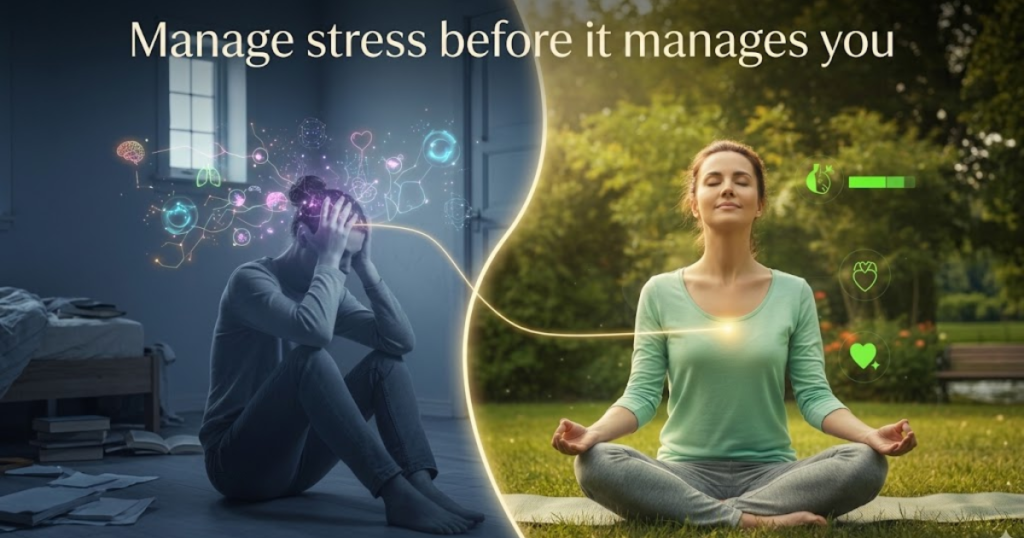
Understanding Stress and How It Works
Stress is the body’s natural reaction to pressure, change, or danger. It can sharpen attention and prepare you to act quickly. However, repeated pressure without enough recovery can affect mental health, sleep, mood, and daily functioning. Understanding this response makes it easier to notice warning signs early.
When your brain detects a challenge, the autonomic nervous system helps prepare your body for action. Heart rate may rise, muscles tighten, and breathing can become faster. This short-lived reaction can be useful. Problems often appear when the body stays on alert long after the situation has passed.
What Happens During the Stress Response?
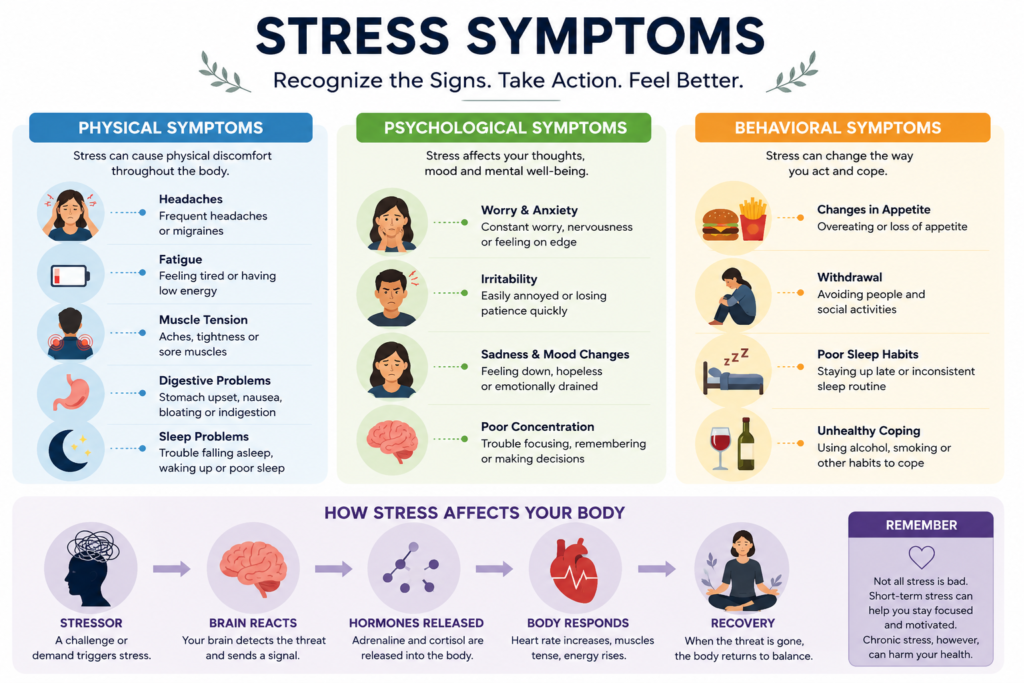
The stress response begins when the brain interprets something as threatening or demanding. Hormones such as adrenaline and cortisol help mobilize energy for immediate action. Once the threat ends, the body normally settles. With ongoing pressure, however, this recovery process may become less effective.
Common Signs That You May Be Under Stress
The warning signs aren’t always obvious. Some people notice headaches or tiredness first, while others become unusually impatient or withdrawn. Common stress symptoms can affect the body, thoughts, emotions, sleep, and behavior. Recognizing several changes together can reveal a pattern that deserves attention.
Physical signs may include muscle tension, fatigue, headaches, dizziness, stomach discomfort, chest sensations, faster heartbeat, and sleep problems. Emotional changes can involve irritability, worry, sadness, poor concentration, or feeling overwhelmed. These reactions vary widely, so one symptom alone doesn’t prove a specific cause.
| Area affected | Possible signs |
| Physical health | Headaches, tension, fatigue, stomach discomfort |
| Emotions | Irritability, worry, sadness, feeling overwhelmed |
| Thinking | Poor focus, forgetfulness, racing thoughts |
| Behavior | Avoidance, appetite changes, smoking or alcohol use |
Physical and Psychological Symptoms
The physical symptoms of stress often appear because the body remains prepared for action. At the same time, psychological symptoms can make ordinary decisions feel strangely difficult. You may struggle to concentrate, lose patience quickly, or feel mentally drained even after completing simple tasks.
Behavioral Changes
Behavior can reveal what words hide. Someone under prolonged pressure might eat more or less, isolate themselves, sleep poorly, stop exercising, or rely on unhealthy coping methods. These behavioral symptoms of stress can then create another cycle of poor sleep, low energy, and reduced emotional resilience.
What Are the Main Causes of Stress?
The causes of stress differ from person to person because people interpret challenges differently. Work deadlines may energize one person and overwhelm another. Financial uncertainty, relationship conflict, illness, caregiving, grief, moving, parenting, academic pressure, and major life changes can all become significant stressors.
Interestingly, positive events can create pressure too. A wedding, promotion, new baby, house move, or important opportunity may bring excitement alongside uncertainty. The issue isn’t always whether an event is good or bad. What matters is how demanding the situation feels and whether you have enough resources to handle it.
Common Stressors in Everyday Life
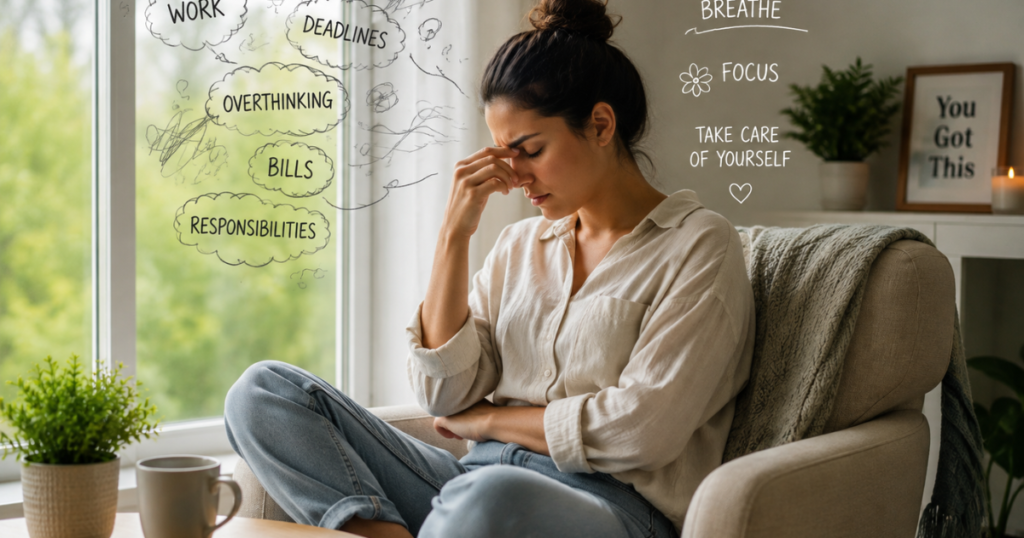
Modern life can create a steady stream of small demands. Emails, traffic, financial worries, family responsibilities, social expectations, and constant notifications may seem harmless individually. Together, however, they can keep your mind occupied for hours. Identifying personal stressors helps you decide which problems need action.
Different Types of Stress You Should Know
Not every stressful experience lasts the same amount of time. Acute stress usually appears suddenly and fades after a challenge passes. Episodic acute pressure happens repeatedly. Chronic stress continues for weeks or months and can keep the body’s alarm system active for too long.
A useful distinction involves recovery. Short bursts often end when the challenge disappears. Long-term pressure doesn’t provide the same breathing space. For example, a difficult presentation may cause temporary tension. Ongoing financial insecurity can feel different because the source remains present day after day.
Acute, Episodic Acute, and Chronic Stress
Acute reactions can help you respond quickly to immediate demands. Episodic acute patterns occur when intense episodes happen frequently. Chronic stress develops when pressure continues for an extended period. Persistent exposure deserves attention because prolonged activation can influence sleep, mood, cardiovascular health, digestion, and immune function.
How Chronic Stress Can Affect Your Health
The stress effects on the body can extend across several systems. Muscles may remain tense, sleep can become disrupted, and digestive symptoms may appear. Long-term activation also interacts with cardiovascular and immune processes. The American Psychological Association notes that prolonged pressure can affect multiple body systems. (APA)
The connection with heart health deserves particular care. Ongoing pressure can raise heart rate and blood pressure temporarily during the body’s alarm response. Chronic exposure may also encourage habits linked with cardiovascular risk, such as inactivity, overeating, smoking, or poor sleep. (www.heart.org)
Stress and Sleep
Poor sleep and emotional pressure can form a frustrating loop. Worry keeps your mind active at night, while insufficient sleep makes the next day harder to manage. Adults generally need around seven to nine hours of sleep, although individual needs vary. (www.heart.org)
Stress and Digestion
The digestive system responds to changes in the nervous system. During demanding periods, some people experience stomach discomfort, appetite changes, constipation, or diarrhea. Persistent digestive symptoms shouldn’t automatically be blamed on emotional pressure. A healthcare professional can help rule out other causes.
Stress and Heart Health
During an alarm response, adrenaline can temporarily increase heart rate, breathing, and blood pressure. Chronic exposure may contribute to cardiovascular risk through several pathways. The American Heart Association emphasizes that the relationship is complex and that unhealthy coping behaviors can also influence heart health. (www.heart.org)
Can Stress Cause Skin Problems?
Your skin can sometimes reveal what your mind has been carrying. Emotional pressure may trigger or worsen stress rash, including hives in some people. These raised, itchy areas can appear suddenly. However, many other triggers can cause hives, including allergies, infections, medications, heat, and environmental exposures.
Skin changes deserve sensible attention rather than quick assumptions. If a rash keeps returning, spreads, becomes painful, causes swelling, or comes with breathing difficulty, medical assessment becomes important. Stress management may help when emotional pressure contributes, but it shouldn’t replace evaluation of persistent skin problems.
Stress Rash and Hives
Hives are raised, often itchy areas that can change location or disappear within hours. Emotional pressure may trigger an episode in some people. The NHS also recognizes skin reactions among possible symptoms associated with stress. (nhs.uk)
Effective Ways to Relieve Stress Naturally
Good stress relief doesn’t require an elaborate routine. A short walk, slower breathing, regular exercise, adequate sleep, or time with supportive people can make a meaningful difference. The goal isn’t to eliminate every difficult feeling. Instead, healthy habits can help your body return to a calmer state.
Different approaches work for different people. Some find meditation useful, while others prefer yoga, music, prayer, journaling, nature walks, or conversation. Mayo Clinic describes relaxation methods such as deep breathing, meditation, yoga, tai chi, and similar practices as useful tools for managing everyday pressure. (Mayo Clinic)
Relaxation Techniques
Simple relaxation techniques can interrupt the cycle of tension. Slow breathing, progressive muscle relaxation, meditation, and gentle movement may help you notice physical tension before it becomes overwhelming. A relaxing wellness experience, such as massage or a calming spa session, can also complement your broader stress-relief routine.
Meditation and Mindfulness Practices
Mindfulness encourages you to notice thoughts and sensations without immediately reacting to them. Even a few quiet minutes can create psychological space between a difficult thought and your response. With practice, mindfulness may become a useful part of a broader coping routine.
Exercise and Yoga
Physical activity gives the body a healthy outlet for nervous energy. Walking, cycling, swimming, dancing, strength training, and yoga can all fit into a balanced routine. The American Heart Association notes that regular exercise can reduce harmful effects associated with chronic pressure. (www.heart.org)
Lifestyle Habits That Help Manage Stress
Effective stress management often starts with ordinary habits rather than dramatic changes. Regular movement, nutritious meals, sufficient sleep, meaningful relationships, and realistic schedules give your body stronger foundations. These habits won’t remove every challenge. They can make demanding periods easier to handle.
Sleep deserves special attention because exhaustion reduces patience and concentration. Food matters too, particularly when skipping meals leads to energy crashes. Social connection can also provide perspective when your thoughts become repetitive. A trusted friend may notice changes that you haven’t recognized yourself. (www.heart.org)
Building Healthy Coping Strategies
Healthy coping mechanisms focus on what you can control. Breaking large tasks into smaller steps can reduce mental clutter. Setting boundaries may protect your time. Writing down concerns can organize racing thoughts. Professional counseling can also teach practical skills when everyday strategies aren’t enough. (Mayo Clinic)
Nutrition, Sleep, and Social Connection
A balanced diet, quality sleep, movement, and supportive relationships work together. Think of them as maintenance for your physical and emotional systems. None acts like a magic switch. Together, however, they can support energy, concentration, resilience, and overall quality of life.
When Does Stress Become a Serious Problem?
Temporary pressure usually becomes less concerning when the situation ends and your body settles. Persistent symptoms deserve more attention when they interfere with sleep, work, relationships, appetite, concentration, or ordinary activities. Severe or continuing symptoms may also overlap with anxiety, depression, or another health condition.
A healthcare provider can assess your symptoms and look for other explanations. This matters because headaches, chest discomfort, fatigue, digestive problems, and sleep changes can have many causes. Avoid self-diagnosing based on internet information alone. Professional assessment provides a clearer path when symptoms persist.
When to Talk to a Healthcare Professional
Consider seeking professional help when symptoms continue despite reasonable lifestyle changes or when daily functioning becomes difficult. A mental health professional may provide counseling or structured techniques. Medical care becomes especially important when physical symptoms are severe, new, unexplained, or rapidly worsening.
When to Seek Emergency Help
Chest pain, severe breathing difficulty, fainting, sudden neurological symptoms, or thoughts of self-harm require urgent medical attention. Don’t assume these symptoms are simply emotional pressure. If you feel unsafe or face a medical emergency, contact your local emergency service or seek immediate medical care.
How to Prevent Stress From Taking Over Your Life
You can’t control every stressful event. You can, however, build habits that improve your response to difficult situations. Start by noticing early warning signs. Then identify what can change, what needs support, and what must simply be accepted. That approach creates practical control without chasing perfection.
Prevention also means protecting recovery time. Constant productivity leaves little room for the nervous system to settle. Short breaks, hobbies, outdoor time, supportive relationships, and realistic priorities can help. The NHS recommends practical strategies such as physical activity, talking with others, and breaking large tasks into manageable pieces. (nhs.uk)
Creating a Healthier Daily Routine
A useful routine doesn’t need to be complicated. Keep regular sleep hours when possible. Move your body each day. Eat consistently. Make time for people you trust. Reduce unnecessary commitments. Most importantly, leave some space between responsibilities so your day isn’t packed from morning until bedtime.
Knowing What You Can Control
One powerful coping skill is separating controllable problems from uncontrollable events. If a deadline can move, communicate early. If a task can be delegated, ask for help. If something cannot change, redirect energy toward your response. This practical distinction can reduce feelings of helplessness. (Mayo Clinic)
Frequently Asked Questions About Stress
Understanding common questions can help you recognize patterns without jumping to conclusions. The answers below summarize established health guidance while keeping the focus on practical everyday decisions. If symptoms are severe or persistent, professional assessment remains more reliable than online advice.
What Is Stress?
Stress describes the body and mind’s response to pressure, challenge, or perceived threat. A short response can improve alertness and action. Problems may develop when the response stays active for too long or repeatedly disrupts sleep, mood, behavior, and physical health.
What Causes Stress?
Work pressure, financial concerns, relationship difficulties, illness, caregiving, grief, major life changes, and uncertainty can all act as triggers. Even positive events may create pressure when they involve major adjustments. Personal experiences also shape how strongly someone reacts to a particular situation.
How Does Stress Affect the Body?
The body can respond with faster breathing, increased heart rate, muscle tension, sweating, and heightened alertness. With prolonged exposure, people may experience headaches, sleep disruption, digestive symptoms, fatigue, and emotional difficulties. These symptoms can have many other causes as well.
How Can You Relieve Stress Naturally?
Regular movement, adequate sleep, breathing exercises, mindfulness, yoga, social connection, hobbies, and realistic planning can support healthier coping. There isn’t one perfect method. Experimenting with safe approaches can help you discover which habits genuinely make you feel calmer and more capable.
Can Stress Affect Sleep?
Yes. Worry and heightened alertness can make it harder to fall asleep or stay asleep. Poor sleep can then reduce concentration and emotional resilience the following day. Creating a consistent bedtime routine and limiting stimulating activities before bed may support better sleep.
Can Stress Cause Physical Symptoms?
Yes. Physical symptoms can include headaches, muscle tension, fatigue, stomach discomfort, faster heartbeat, dizziness, and sleep problems. However, physical symptoms shouldn’t automatically be attributed to emotional pressure. New, severe, or persistent symptoms deserve appropriate medical evaluation.
When Should You See a Doctor for Stress?
Seek professional guidance when symptoms persist, interfere with everyday life, affect physical health, or become difficult to manage alone. Immediate medical care is appropriate for severe physical symptoms or a mental health crisis. Early support can prevent problems from becoming more complicated.
The Bottom Line
Stress is a normal part of life, but your response to it matters. Short periods can sharpen attention and encourage action. Persistent pressure is different. When your body and mind rarely get time to recover, sleep, mood, behavior, and physical health may begin to suffer.
The most useful approach combines awareness with practical action. Notice your warning signs. Identify your triggers. Protect sleep and movement. Stay connected with supportive people. Practice relaxation regularly. When symptoms become persistent or overwhelming, seek professional guidance rather than trying to handle everything alone.
Sources and Further Reading
| Source | What it covers |
| NHS — Stress | Symptoms, causes, coping, and when to seek help |
| Mayo Clinic — Chronic stress | Long-term effects and healthy coping |
| American Psychological Association — Stress effects on the body | How prolonged pressure affects body systems |
| American Heart Association — Stress and Heart Health | Cardiovascular effects and healthy habits |
| Mayo Clinic — Relaxation Techniques | Breathing, meditation, yoga, and relaxation |