
Introduction
Laser technology has become an important part of modern healthcare and cosmetic treatment. From reducing unwanted hair and improving the appearance of scars to treating pigmentation and resurfacing damaged skin, medical lasers can deliver controlled energy to very specific areas of the body. This precision is one of the main reasons laser-based procedures are now widely discussed by patients looking for alternatives to more invasive treatments.
The phrase wellhealthorganic laser technology and treatment is increasingly searched by people who want to understand how modern laser procedures work, what they can treat, how safe they are, and what kind of results they may provide. It is important, however, to separate general information about established medical laser technology from promotional claims associated with individual websites or brands. The effectiveness and safety of any laser procedure depend on the actual device being used, the condition being treated, the patient’s skin characteristics, and the qualifications of the healthcare professional performing the procedure.
Modern laser treatment is not a single procedure. Different laser systems use different wavelengths, energy levels, pulse durations, and treatment methods. A laser selected for hair reduction may work very differently from one designed for scar resurfacing, pigmentation treatment, tattoo removal, or vascular lesions.
Understanding these differences can help patients have realistic expectations and make more informed decisions before undergoing treatment.
What Is WellHealthOrganic Laser Technology and Treatment?
The term wellhealthorganic laser technology and treatment is generally used online in discussions about modern laser-based health, skin, and cosmetic procedures. Rather than referring to one universal medical treatment, the topic covers a broad range of laser technologies used across dermatology and aesthetic medicine.
A medical laser produces concentrated light energy at a selected wavelength. When the laser is directed toward the skin or another target tissue, that energy can be absorbed by particular structures such as pigment, blood vessels, water within the skin, or hair follicles.
This ability to target selected tissue is known as selective treatment. Instead of affecting an entire area equally, properly selected lasers can concentrate their energy on the structure being treated.
The exact result depends on the laser system and treatment goal. Some lasers intentionally remove very thin layers of damaged skin. Others heat deeper tissue without removing the surface. Certain systems target melanin in hair follicles, while vascular lasers are designed to interact more strongly with blood vessels.
Because these technologies work differently, there is no single laser that is suitable for every condition or every patient.
How Does Laser Technology Work?
Laser is an acronym for Light Amplification by Stimulated Emission of Radiation. In practical medical terms, a laser produces a concentrated beam of light with controlled characteristics.
When laser light enters the skin, specific substances known as chromophores absorb the energy. Common targets include melanin, hemoglobin, and water.
Melanin gives color to the skin and hair. Lasers designed for hair reduction or certain pigmentation problems may target melanin.
Hemoglobin is found inside red blood cells. Some vascular laser treatments target hemoglobin to reduce the appearance of visible blood vessels or vascular lesions.
Water is abundant in skin tissue. Resurfacing lasers can target water to remove or heat controlled areas of skin, encouraging tissue renewal and collagen remodeling.
The physician can adjust factors such as wavelength, pulse duration, energy level, spot size, and treatment depth depending on the patient’s needs.
This level of customization is one of the major advantages of modern laser treatment, but it is also why professional assessment is important.
Different Types of Laser Treatments
Ablative Laser Treatment
Ablative lasers remove controlled portions of the skin’s outer layers. They are commonly associated with skin resurfacing procedures designed to improve texture, wrinkles, scars, or significant sun damage.
Carbon dioxide and erbium-based systems are among the better-known examples of ablative laser technology.
Because ablative treatment affects the skin surface more aggressively, recovery can be longer than with less invasive options. Redness, swelling, peeling, temporary sensitivity, and changes in pigmentation can occur during healing.
The benefit is that ablative resurfacing may produce more noticeable changes in suitable patients when compared with milder treatments.
Non-Ablative Laser Treatment
Non-ablative lasers generally work beneath the skin surface without removing the entire outer layer.
Their purpose is often to heat targeted tissue and stimulate processes such as collagen remodeling. They may be used to address mild wrinkles, uneven texture, pigmentation, or other cosmetic concerns.
Because the surface is affected less aggressively, recovery may be shorter. However, multiple treatment sessions may be required depending on the condition and device.
Fractional Laser Technology
Fractional laser systems treat microscopic sections of skin while leaving surrounding areas untreated.
Instead of treating the entire surface at once, the laser creates many tiny treatment zones. The untreated tissue surrounding these areas can contribute to the healing process.
Fractional technology may be ablative or non-ablative depending on the device.
It is frequently used for acne scars, skin texture irregularities, wrinkles, and certain forms of sun-related skin damage.
Pulsed and Pigment-Targeting Lasers
Some laser systems deliver energy in short pulses designed to interact with pigment.
These technologies may be used for certain dark spots, tattoos, freckles, or other pigmented lesions. The laser breaks or damages targeted pigment so that the body can gradually process it.
Not every pigmentation problem should be treated with a laser. Conditions such as melasma can be complicated, and inappropriate treatment may sometimes worsen pigmentation. Professional diagnosis is therefore particularly important before treating dark patches on the skin.
Laser Hair Reduction
Laser hair reduction is one of the most familiar applications of cosmetic laser technology.
The procedure works by directing light toward pigment inside the hair follicle. The absorbed energy damages structures responsible for hair growth, reducing future growth in treated follicles.
Hair grows in cycles, which is why a single session normally cannot treat every active follicle. Multiple sessions are commonly needed because laser energy works most effectively on hairs that are in an appropriate growth phase.
Results can differ based on hair color, skin tone, treatment area, hormones, laser type, and individual response.
Modern devices and treatment protocols have made laser hair reduction possible for a wider range of skin tones than earlier systems, but careful laser selection and settings remain essential.
The term permanent hair removal can also create unrealistic expectations. Laser treatment is generally better understood as long-term hair reduction. Some people may still experience regrowth and require maintenance treatment.
Laser Treatment for Acne Scars
Acne can leave changes in both skin color and texture. Depressed scars, uneven surfaces, enlarged pores, and post-inflammatory pigmentation may remain long after active acne improves.
Laser resurfacing can sometimes improve selected acne scars by creating controlled injury within the skin. During healing, new collagen formation and tissue remodeling may improve texture.
Fractional laser systems are commonly considered for acne scar treatment because they create microscopic treatment areas rather than resurfacing the entire skin surface.
The type of scar matters significantly. Deep ice-pick scars, rolling scars, boxcar scars, raised scars, and pigmentation may respond differently.
A dermatologist may therefore combine laser treatment with other techniques rather than relying on one procedure.
It is also important to distinguish active acne from acne scars. Treating scars while acne remains uncontrolled may not provide the best long-term result because new lesions can create additional scars.
Laser Skin Resurfacing and Rejuvenation
Skin resurfacing is another major area associated with wellhealthorganic laser technology and treatment searches.
The skin naturally changes with age. Collagen levels, elasticity, hydration, and cellular turnover may decline over time. Sun exposure can also contribute to wrinkles, pigmentation, rough texture, and uneven tone.
Laser resurfacing may help improve some of these changes by removing damaged surface tissue or heating deeper skin layers.
During the healing process, collagen remodeling may produce smoother or firmer-looking skin.
Results depend heavily on treatment intensity. A light resurfacing procedure may require minimal recovery but provide relatively subtle improvement. More aggressive resurfacing can create stronger effects but usually involves more downtime and a greater possibility of complications.
Laser treatment does not stop natural aging. Even successful resurfacing cannot prevent future wrinkles, sun damage, or changes in skin structure.
Daily sun protection and appropriate skincare continue to matter after treatment.
Treatment of Pigmentation and Dark Spots
Pigmentation problems are among the most common cosmetic concerns.
Dark spots may develop because of sun exposure, inflammation, aging, hormones, medications, or other causes.
Certain lasers can target excess pigment while limiting damage to surrounding tissue. Once the pigment absorbs laser energy, it may fragment or become damaged, after which the body gradually clears part of the treated material.
This approach can work well for certain clearly defined pigmented lesions.
However, pigmentation treatment requires care because laser energy can also trigger inflammation. In some patients, especially those with deeper skin tones or a tendency toward post-inflammatory hyperpigmentation, treatment may temporarily or permanently darken or lighten the skin.
This is one reason skin tone should never be treated as a minor consideration during laser planning.
Laser Treatment for Scars
Lasers may also be used as part of scar management.
Depending on the scar, laser therapy may help reduce redness, improve texture, soften tight tissue, or make the scar less noticeable.
Cleveland Clinic notes that laser skin resurfacing can be used in some situations to improve scar appearance and may help with issues such as tightness, redness, texture, itching, or discomfort.
Results depend on the type, location, age, and depth of the scar.
Laser therapy cannot guarantee complete scar removal. The more realistic goal is usually improvement rather than making the scar disappear entirely.
Main Benefits of Modern Laser Technology
Precision
One of the most valuable characteristics of laser treatment is its ability to target specific tissue.
By selecting the appropriate wavelength and settings, trained professionals can direct energy toward pigment, blood vessels, hair follicles, or water in the skin.
This targeted approach may limit unnecessary effects on nearby tissue.
Less Invasive Treatment Options
Many dermatologic laser procedures do not require the type of surgical incision associated with conventional operations.
That does not mean every laser procedure is painless or risk-free, but certain treatments can offer an alternative for people who are not candidates for, or do not require, traditional surgery.
Adjustable Treatment
Modern laser devices generally allow clinicians to adjust treatment parameters according to the patient and condition.
A treatment plan can consider factors such as skin tone, treatment depth, target size, previous procedures, sensitivity, and desired outcome.
Potential for Shorter Recovery
Some non-ablative and fractional treatments may involve relatively limited downtime compared with more aggressive procedures.
Recovery still varies widely. A superficial laser session might cause temporary redness, while deeper resurfacing may require a substantially longer healing period.
Terms such as “no downtime” should therefore be treated cautiously unless they accurately describe the specific procedure being offered.
Is Laser Treatment Safe?
Laser procedures can be safe when performed appropriately, but no medical or cosmetic treatment is completely risk-free.
Possible effects after laser treatment include redness, swelling, sensitivity, temporary discomfort, crusting, peeling, itching, or temporary changes in skin appearance.
More significant complications can include burns, blistering, infection, scarring, persistent pigmentation changes, or unintended tissue damage.
Cleveland Clinic identifies swelling, blistering, and redness among possible effects associated with laser skin resurfacing.
The possibility of complications depends on the device, energy level, treatment location, skin characteristics, medical history, provider experience, and aftercare.
People should be cautious about clinics that describe every laser procedure as completely painless, suitable for everyone, or guaranteed to deliver permanent results.
Laser Treatment and Different Skin Tones
Skin tone plays an important role in laser medicine because melanin absorbs certain wavelengths of light.
When a laser targets pigment, people with more melanin in their skin may have a greater risk of unintended heating or pigmentation changes if an unsuitable device or setting is used.
This does not mean people with darker skin cannot receive laser treatment.
Modern technology has expanded treatment possibilities considerably. The important issue is choosing an appropriate laser and a practitioner experienced in treating the patient’s skin type.
A proper consultation should consider previous pigmentation problems, tendency toward scarring, current medications, recent sun exposure, tanning, and existing skin conditions.
What Happens During a Laser Treatment Session?
The experience depends on the procedure.
Before treatment, the provider usually evaluates the area and determines whether laser therapy is appropriate. Medical history, medications, previous cosmetic procedures, infections, pregnancy status where relevant, sun exposure, and skin sensitivity may need to be discussed.
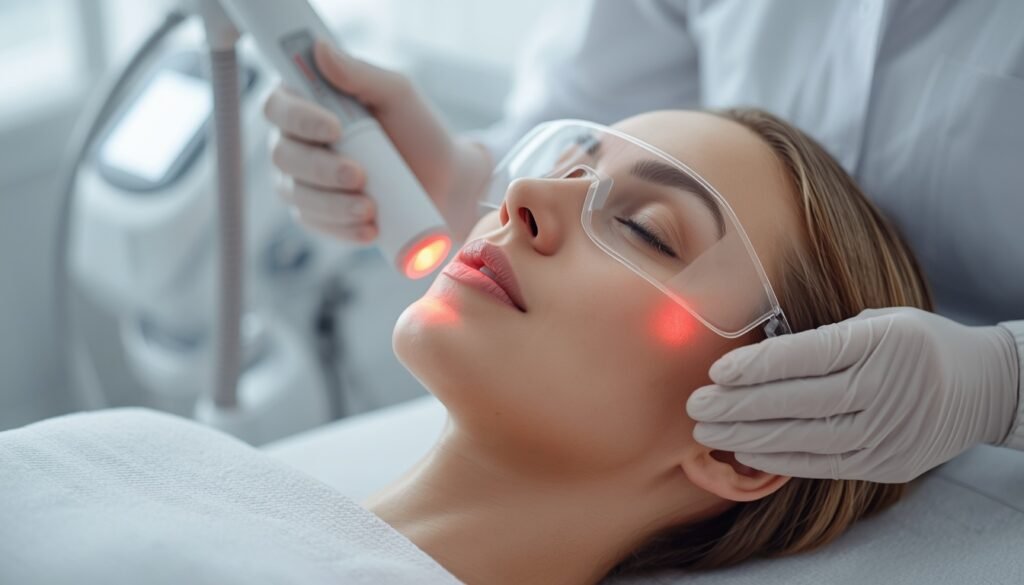
Protective eyewear is commonly used because laser energy can damage the eyes.
Depending on the treatment, a topical anesthetic, cooling system, cold air, gel, or another comfort measure may be used.
The laser handpiece is then applied or directed toward the treatment area. Patients sometimes describe the sensation as warmth, snapping, tingling, or short bursts of heat.
Treatment duration can range from a very short session for a small area to substantially longer procedures for larger areas or intensive resurfacing.
Recovery After Laser Treatment
Aftercare plays an important role in the outcome.
Immediately after treatment, the skin may appear red or swollen. Some procedures produce temporary dryness, crusting, or peeling.
Sun protection is particularly important because newly treated skin can be more sensitive to ultraviolet radiation.
Patients may also be advised to use gentle skincare products and avoid irritating ingredients until healing progresses.
After more aggressive resurfacing procedures, detailed wound-care instructions may be required.
The provider’s instructions should take priority over general online advice because aftercare varies according to the exact laser and treatment intensity.
How Many Laser Sessions Are Needed?
There is no universal answer.
Some procedures can provide noticeable results after one session, while others are intentionally performed as a series.
Laser hair reduction usually requires multiple visits because hair follicles are active at different times.
Scar and pigmentation treatments may also require several sessions depending on severity and response.
A treatment package advertised with a fixed number of sessions should not be interpreted as a guarantee that every patient will achieve the same result in that period.
Individual biology matters.
How Long Do Laser Treatment Results Last?
The duration of results depends on what is being treated.
Hair reduction may remain noticeable for a long period, although maintenance sessions can sometimes be necessary.
Pigmentation can return if the underlying trigger remains present, particularly with continued sun exposure or hormonally influenced pigmentation.
Skin resurfacing may improve existing texture and lines, but the natural aging process continues.
Scar improvements may be long lasting, although the amount of improvement varies.
Laser technology should therefore be viewed as a treatment method rather than a permanent solution to every cosmetic or dermatological concern.
Who Should Be Careful With Laser Procedures?
Laser treatment may not be suitable for everyone at every stage.
People with active infections, certain skin diseases, recent tanning, particular medications, unusual wound healing, or a history of abnormal scarring may require special consideration.
Medical conditions and medications can affect healing and skin sensitivity.
A qualified healthcare professional should determine whether treatment is appropriate instead of relying only on online eligibility questionnaires or promotional material.
Choosing a Laser Treatment Provider
The quality of the provider can be as important as the technology itself.
Patients should know what device is being used and why it has been selected for their condition.
They should also understand the expected benefits, realistic limitations, possible complications, recovery time, cost, and alternative treatments.
Before-and-after photographs can be helpful when they represent genuine patients treated with comparable technology, but photographs should not be viewed as a guarantee of identical results.
Claims such as “risk-free,” “instant permanent results,” or “works for every skin type without side effects” should be approached carefully.
A trustworthy consultation should include discussion of limitations as well as potential benefits.
Is Newer Laser Technology Always Better?
Not necessarily.
Newer devices may offer useful improvements in cooling, energy delivery, pulse control, treatment speed, or comfort.
However, a newer machine does not automatically mean a better clinical result.
The correct technology depends on the condition being treated. A well-established device used by an experienced professional may be more appropriate than the newest system available.
Treatment technique and patient selection are major parts of successful laser therapy.
The Future of Laser Treatment
Laser medicine continues to develop as manufacturers and researchers refine energy delivery, cooling, imaging, and treatment customization.
Future systems are likely to focus increasingly on precision, shorter recovery, better comfort, and safer treatment across a wider variety of skin types.
Combination treatment is also becoming more common in aesthetic medicine. Rather than relying on one procedure for every concern, clinicians may combine carefully selected technologies when medically appropriate.
The goal is not simply to use stronger energy. Modern treatment development increasingly focuses on delivering enough energy to achieve the desired biological effect while limiting unnecessary tissue injury.
Conclusion
WellHealthOrganic laser technology and treatment is a useful search topic for understanding the broader role of lasers in modern dermatology and cosmetic medicine. Laser technology can be used for concerns such as unwanted hair, acne scars, uneven skin texture, selected pigmentation problems, visible scars, and signs of sun damage or aging.
Its main advantage is precision. Different wavelengths and treatment settings can target particular structures within the skin while reducing unnecessary effects on surrounding areas.
At the same time, laser treatment should not be viewed as a universal or completely risk-free solution. Results depend on the condition being treated, the patient’s skin and health characteristics, the laser system, treatment settings, and the experience of the professional carrying out the procedure.
People considering laser therapy should focus less on promotional terms and more on the actual treatment being proposed. Knowing the device, understanding the expected outcome, discussing possible complications, and choosing a qualified professional can make the decision much more informed.
Modern laser technology offers significant possibilities, but the best treatment is always the one chosen for the right patient, for the right reason, with realistic expectations.
Frequently Asked Questions
What is WellHealthOrganic laser technology and treatment?
WellHealthOrganic laser technology and treatment is a search term commonly associated with information about modern laser-based cosmetic and dermatological procedures. These may include hair reduction, skin resurfacing, scar treatment, pigmentation procedures, and other applications. The actual effectiveness of treatment depends on the specific medical laser technology being used rather than the search term or brand name alone.
Is laser treatment safe for the skin?
Laser treatment can be safe when an appropriate device and settings are used by a properly trained professional. Temporary redness, swelling, discomfort, peeling, or pigmentation changes may occur. More serious complications such as burns, infection, scarring, and persistent color changes are possible, although the risk varies by procedure and patient.
Can laser treatment permanently remove hair?
Laser treatment can produce long-term hair reduction, but permanent removal of every hair cannot be guaranteed. Multiple sessions are generally necessary because hair grows in different cycles, and some patients may need maintenance treatment in the future.
Can laser technology remove acne scars completely?
Laser treatment may improve the texture and appearance of certain acne scars, but complete removal cannot be guaranteed. Different types of acne scars respond differently, and treatment may involve laser resurfacing together with other dermatological techniques.
How long does it take to recover from laser treatment?
Recovery depends on the type and intensity of the procedure. Mild non-ablative treatments may cause temporary redness with relatively little downtime, while aggressive ablative resurfacing can require a much longer healing period. Patients should follow the specific aftercare instructions provided by their treating professional.