

Winter in India has a colour: the deep red of fresh gajar. From November to February, markets fill with long, sweet Delhi red carrots, and every home seems to have crunchy carrot sticks or a pot of gajar ka halwa on the stove. But carrots are far more than a winter treat. The list of carrot benefits is long — better eyesight, glowing skin, stronger immunity, smoother digestion and a healthier heart — all from one of the cheapest vegetables in the mandi.
A single medium carrot has only about 25 calories, yet it carries fibre, potassium, vitamin K, vitamin C and, above all, beta-carotene — the plant pigment your body turns into vitamin A. That one nutrient is behind most of what makes carrots special. Here are seven real carrot benefits, plus how to eat gajar for the most nutrition.
What Is Inside a Carrot?
Before the benefits, it helps to know what you are actually eating. A medium carrot of about 60 grams contains roughly 25 calories, 6 grams of carbohydrates, around 2 grams of fibre, and very little fat or protein. What it lacks in calories, it makes up for in micronutrients.
The star is beta-carotene, the orange pigment your body converts into vitamin A — a vitamin your eyes, skin and immune system all depend on. One medium carrot can supply more than two-thirds of an adult’s daily vitamin A needs. Carrots also provide lutein for eye health, potassium for blood pressure, vitamin K for bones, and small amounts of vitamin C and B vitamins.
Unlike many “superfoods”, carrots need no special preparation. You can eat them raw, grated into a salad, cooked into a sabzi, blended into soup, or slow-cooked into halwa.
1. Carrot Benefits for Eyes and Vision
The oldest and best-known of all carrot benefits is the one for your eyes, and it is not a myth. Your retina needs vitamin A to make rhodopsin, the pigment that lets your eyes adjust to dim light. When vitamin A runs low, night vision is often the first thing to suffer — and eating carrots regularly keeps those stores topped up.
Carrots also contain lutein and zeaxanthin, antioxidants that collect in the retina and help filter harmful blue light. Diets rich in them are linked to a lower risk of age-related macular degeneration, which slowly steals central vision in older people.
To be clear, carrots will not fix weak eyesight, remove the need for glasses, or cure eye disease. What they do is give your eyes the raw material they need to work properly and protect themselves over time — reason enough to keep them on your plate, especially for children, heavy screen users and older adults. Sweet potatoes are another strong source of the same nutrient, so a diet that includes both carrots and sweet potatoes covers your vitamin A needs easily.
For the official guidance on how much vitamin A adults need and where it comes from, the NHS explains it plainly on its vitamin A page.
2. Carrot Benefits for Skin
Your skin replaces itself constantly, and vitamin A is one of the nutrients that drives that renewal. It supports the production of new skin cells and helps repair the damage caused by sun, pollution and dry winter air. People who eat plenty of beta-carotene-rich foods often notice their skin looks a little warmer and healthier — the pigment genuinely contributes to skin tone from the inside.
Carrots also contain vitamin C, which your skin uses to make collagen, the protein that keeps skin firm, and antioxidants that mop up the free radicals behind fine lines and dullness. A carrot will not replace sunscreen or moisturiser, but in your diet it supports skin in a way no cream can reach.
One honest caution: eating very large amounts of carrots every day for weeks can tint the palms and soles yellowish-orange. This is carotenemia — harmless, and it fades once you cut back. It is not jaundice or a sign of liver trouble, though a doctor can tell the difference in a minute if you are unsure.
3. Carrot Benefits for Immunity
Winter is also the season of coughs, colds and sore throats, and that is exactly when carrots are at their best. Vitamin A plays a direct role in immunity: it helps maintain the mucus membranes in your nose, throat and gut, which are your body’s first barrier against germs. It also supports the production and function of white blood cells.
Carrots are not a medicine, and no single food can stop a cold. But a diet short on vitamin A leaves the immune system working with one hand tied behind its back. With vitamin C from foods like oranges, the vitamin A from carrots is part of a simple winter immunity routine: seasonal vegetables, enough sleep and warm home-cooked food.
Children benefit most. In Indian homes, carrot sticks with a little chaat masala, or grated carrot in a paratha, are an easy way to get vitamin A into a child who refuses green vegetables.
4. Carrot Benefits for Digestion and Gut Health
Carrots are a good source of fibre — about 2 grams in a medium carrot, most of it soluble. Soluble fibre feeds the friendly bacteria in your gut, which produce compounds that keep the gut lining healthy. Fibre also adds bulk to the stool, helping prevent constipation — a common winter complaint when water intake drops and activity slows down.
Raw carrots have another small advantage: their crunch stimulates saliva and chewing, where digestion begins. Grated carrot in raita, in a mixed vegetable sabzi, or in a carrot and cucumber salad adds fibre without many calories.
Cooking softens the fibre and makes it easier to digest, so sensitive stomachs often tolerate cooked carrots better than raw ones. There is no single right way — raw for crunch and fibre, cooked for comfort and better nutrient absorption.
5. Carrot Benefits for Heart Health
Heart health is not the first thing people associate with carrots, but the connection is real. Their soluble fibre helps lower LDL cholesterol by binding some of it in the gut before it is absorbed. Potassium helps balance sodium and supports healthy blood pressure, and antioxidants like beta-carotene and lutein help protect blood vessels from oxidative damage.
No vegetable works alone. Carrots help the heart best as part of a pattern — less fried food, less salt, more vegetables, regular walking — and they earn their place in it. Like beetroot, which supports blood pressure through its natural nitrates, carrots are a simple everyday food that quietly helps your heart.
6. Carrot Benefits for Weight and Blood Sugar
At about 25 calories per carrot, gajar is one of the most satisfying low-calorie foods you can eat. Water, fibre and crunch leave you full after a plate of carrot sticks, while the same calories from namkeen or biscuits would leave you hungry again in twenty minutes. That makes carrots genuinely useful for anyone trying to lose weight after Diwali or avoid winter weight gain.
For blood sugar, the whole carrot matters. Its fibre slows how fast its natural sugars reach the blood, giving it a low glycaemic index. Carrot juice is different: juicing strips out most of the fibre, so the sugars hit faster and the drink fills you up far less. A small glass occasionally is fine, but it is not equal to the whole vegetable — for people with diabetes, the whole carrot is clearly better. If you drink juice, keep the glass small, have it with food, and skip added sugar.
7. Carrots in Winter: Why Red Winter Gajar Is Special

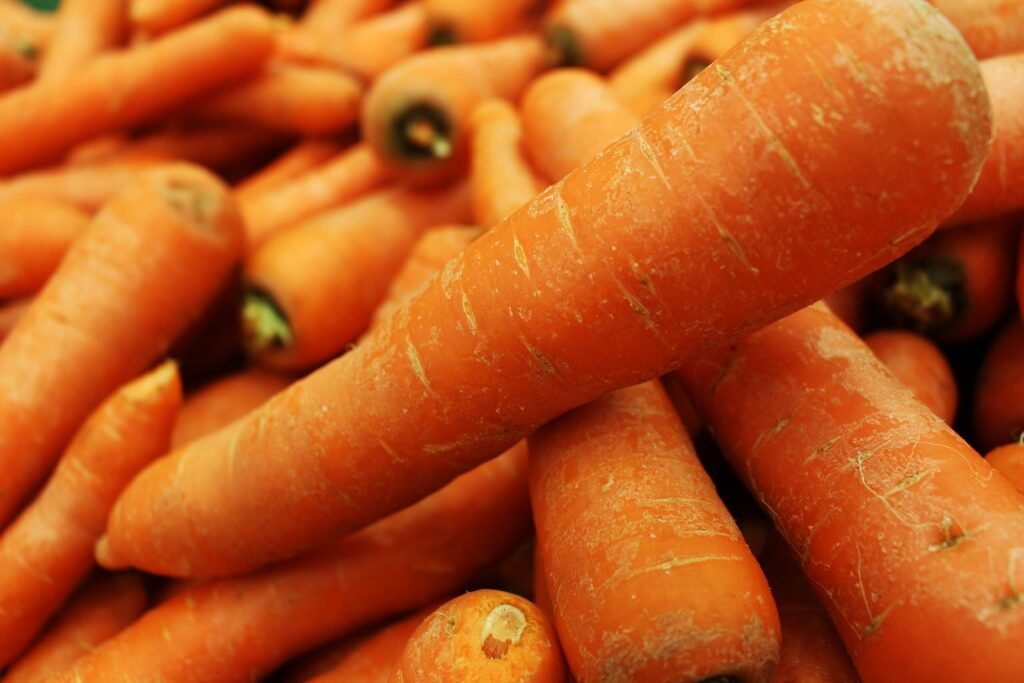
India grows carrots all year, but winter carrots are different. The long, deep-red Delhi carrots that arrive from November are sweeter, juicier and richer in pigments than the pale orange ones of summer. Their red colour comes from lycopene and anthocyanins, additional antioxidants on top of the usual beta-carotene. They are also the carrots that make gajar ka halwa — the slow-cooked dessert of grated carrot, milk, ghee and sugar that is practically a winter ritual in North India.
Halwa is delicious, but once you add generous ghee and sugar it becomes a dessert, not a health food. The carrots inside are still nutritious, but the sugar and fat change the picture. Enjoy a small bowl, make it at home with less sugar, and get the rest of your carrots from simpler preparations — raw sticks, grated salad, sabzi or soup.
Winter is also when carrots are cheapest — the best season to build a habit around them. Buy them firm, with bright green tops if possible, and store them bagged in the fridge; they keep for two weeks or more.
How to Eat Carrots: Raw, Cooked, Juice or Halwa?
There is no single best way to eat carrots — each method has its own strength:
Raw: Maximum fibre and crunch. Best for snacking, salads and raita. Wash well and peel if the skin looks rough. With hummus or curd dip, raw sticks make a far better evening snack than fried options.
Cooked: Light cooking increases the beta-carotene your body can absorb, because heat breaks down the tough cell walls. Carrot sabzi, mixed vegetable soup and carrot in dal all work well. Add a little ghee or oil — vitamin A is fat-soluble, so some fat helps absorption.
Juice: Quick and concentrated, but the fibre is lost. Keep portions small and do not add sugar. Juice is a supplement to eating vegetables, not a replacement for them.
Gajar ka halwa: A celebration food. Enjoy it in winter, in a small portion, and preferably homemade so you control the sugar and ghee.
A practical routine: one raw carrot a day as a snack, plus cooked carrots in sabzi or soup three or four times a week. That covers the benefits without overdoing anything.
How Many Carrots a Day?
For most adults, one to two medium carrots a day is sensible — a strong dose of vitamin A and fibre with no downside. Eating five or six large carrots every day for weeks is where carotenemia, the harmless orange tint to the skin, can appear. It is not dangerous and fades within weeks of cutting back, but it means you have gone past the sweet spot.
Children can eat carrots daily too — grated for toddlers, sticks for older children — and get the same eye and immunity benefits. People on blood-thinning medicines or with specific medical conditions should follow their doctor’s advice, as with any food eaten in large amounts.
Frequently Asked Questions
Is it good to eat carrots every day?
Yes, one to two medium carrots a day suits most people. They are low in calories and rich in vitamin A, fibre and potassium. Only very large daily amounts over many weeks cause carotenemia, a harmless orange tint that fades when you cut back.
Do carrots really improve eyesight?
Carrots support eyesight rather than improving it beyond normal. Their beta-carotene becomes vitamin A, which the retina needs for dim light, and their lutein helps protect the retina. They will not cure weak eyesight or remove the need for glasses, but a vitamin A deficiency definitely harms vision.
Can eating too many carrots turn your skin orange?
Yes. Eating a lot of carrots every day for weeks can tint the palms and soles yellowish-orange. This is carotenemia — harmless, and it fades once you eat fewer carrots. It is not jaundice and does not mean your liver is damaged.
Is carrot juice as healthy as eating a whole carrot?
No. Juice removes most of the fibre, so its sugars reach the blood faster and it fills you up far less. A small glass occasionally is fine, but the whole carrot is the better everyday choice, especially for blood sugar.
Which is better — raw carrots or cooked carrots?
Both are good, for different reasons. Raw carrots keep all their fibre and crunch — best for digestion and snacking. Light cooking increases beta-carotene absorption, so cooked carrots give you more vitamin A. A mix of both across the week is simplest.
Disclaimer: This article is for general information only and is not a substitute for medical advice. If you have a health condition, please consult your doctor.