
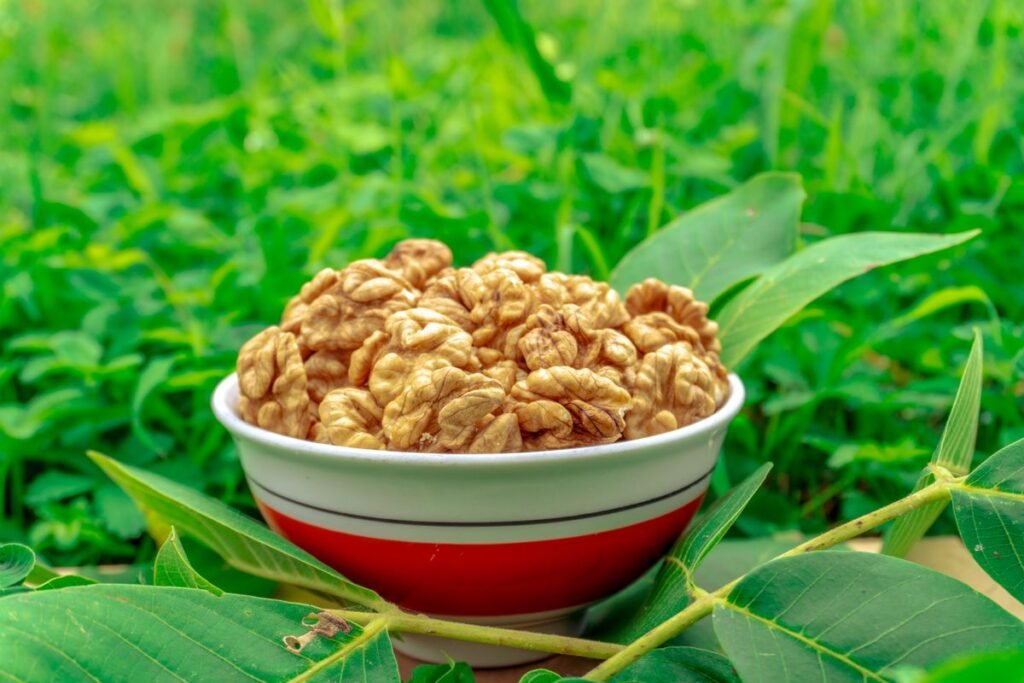
Walnuts, or akhrot, have been a winter staple in Indian homes for generations — with hot kahwa in Kashmir, or in panjiri and ladoos in the plains. The walnuts benefits in winter go far beyond tradition, though. Of all the nuts we eat, walnuts are the only ones rich in a plant omega-3 fat called ALA, and they carry vitamin E, polyphenols, magnesium and fibre that suit the cold months well — when skin dries out, immunity dips, and the body craves energy-dense food.
This is not a miracle-food story — walnuts will not cure anything on their own. But eaten in the right amount every day, they are one of the simplest winter habits you can build. Here is what they do, how many to eat, and who should be careful.
What Makes Walnuts Different from Other Nuts
Every nut is nutritious, but walnuts have a different fat profile. Almonds are rich in monounsaturated fat and vitamin E; walnuts are dominated by polyunsaturated fats, and they are the only nut with meaningful amounts of alpha-linolenic acid (ALA), the plant form of omega-3.
A small handful — about 28 grams, or roughly 7 walnut halves — gives you around 2.5 grams of ALA, 4 grams of protein, 2 grams of fibre and roughly 185 calories, along with magnesium, copper, manganese and vitamin E. The thin brown skin of the kernel holds polyphenols called ellagitannins; it tastes slightly bitter, so some people peel it off, but it carries a good share of the antioxidants.
One honest point: the body converts only a small part of ALA into the EPA and DHA omega-3s found in fish, so walnuts are not a replacement for fish. But they are the best plant source of omega-3 in an Indian kitchen — which matters most for vegetarians, who otherwise get very little omega-3.
Walnuts Benefits in Winter for Brain and Memory
Everyone has heard that a walnut looks like a tiny brain. It is folklore, not science — but research has been kind to the coincidence. The brain is nearly 60 percent fat, and the ALA in walnuts, with vitamin E and polyphenols, supports its defences against oxidative stress, a factor linked with age-related memory decline.
Studies in older adults have found regular nut eaters tend to score better on memory and thinking tests. In one two-year trial, half a cup of walnuts a day showed small benefits in cognitive testing, though the effects were modest. No study proves walnuts sharpen memory in a few weeks — they provide the raw materials the brain uses, and a daily habit over months is a reasonable way to support it.
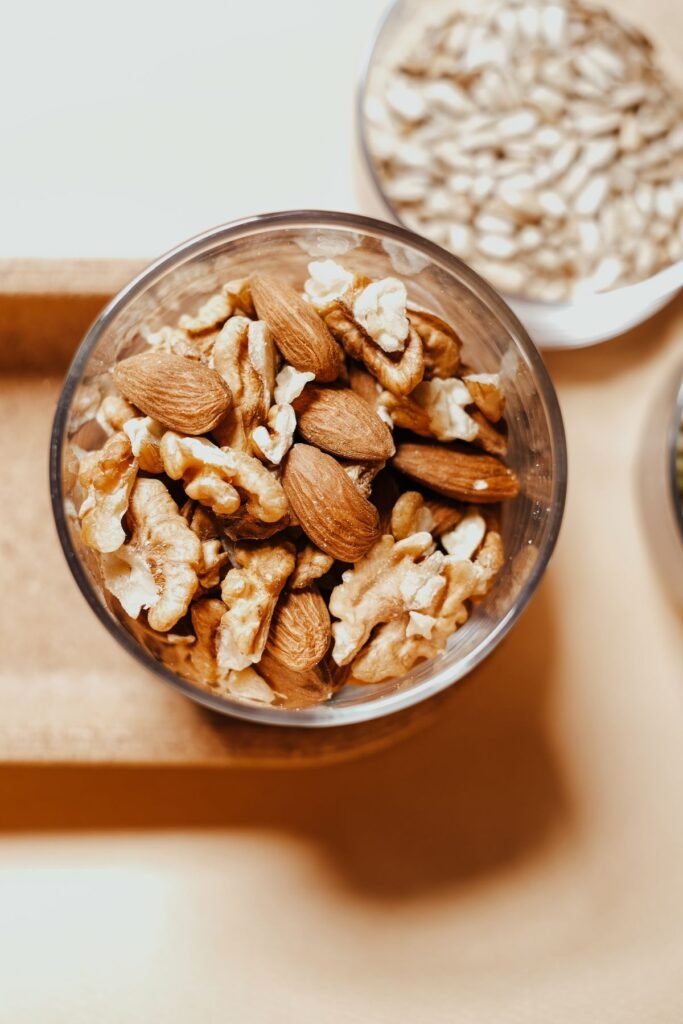
For students and office workers, the practical benefit is simpler: a handful in the morning gives steady energy without the sugar crash of biscuits or namkeen. Pair them with soaked almonds — another classic Indian brain food — for a breakfast addition that needs no cooking at all.
Walnuts for Heart Health
The heart is where the evidence is strongest. A meta-analysis of 26 trials with more than a thousand participants found walnut-enriched diets modestly lowered total cholesterol, LDL (“bad”) cholesterol and triglycerides. A two-year study of 708 healthy older adults found the same: daily walnuts meant lower LDL and total cholesterol.
Walnuts replace saturated fat with unsaturated fat, and their ALA and polyphenols help blood vessels relax and widen — small studies have shown improved flow-mediated dilation after walnut-rich meals. A broad review of nut consumption and heart health published in the journal Nutrients reaches the same conclusion: regular nut intake is associated with a lower incidence of coronary heart disease, and walnuts stand out because of their ALA content.
None of this means walnuts can replace medicines or a doctor’s advice. If you have high cholesterol or blood pressure, they are a useful part of the diet, not a treatment. But for a healthy person, swapping a fried evening snack for a handful of walnuts is one of the easiest heart-friendly changes there is.
Walnuts for Skin and Hair in Winter
Winter is hard on skin. Cold air outside and dry indoor air pull moisture out, leaving many people with flaky skin, chapped lips and dull hair. Walnuts help in two quiet ways: their fats support the skin’s barrier, and their vitamin E protects skin cells from oxidative damage.
Vitamin E is a fat-soluble antioxidant in the skin’s oil layer, and because it needs fat to be absorbed, a walnut is an efficient way to get it. The omega-3 fats help the skin hold moisture — dry, tight winter skin is often partly a sign that the diet is low in healthy fats.
For hair, the benefit is indirect but real. Hair is made of protein, and walnuts provide protein with biotin, zinc and vitamin E, which support normal hair growth. They will not regrow hair or stop hair fall caused by hormones or illness. What they can do is close a common gap: many Indian diets, especially vegetarian ones, run low on zinc and healthy fats in winter.
Immunity and Warmth: Why Walnuts Suit Cold Weather
There is a reason dry fruits come out in winter and disappear in summer: walnuts are energy-dense, and in cold weather the body uses more energy to stay warm. A small handful gives steady energy without a heavy meal — which is why walnuts have always been part of winter food in North India, in panjiri for new mothers and pinni for children.
Walnuts also support immunity in a general way: they contain zinc, magnesium and vitamin B6, which the immune system uses, and their polyphenols have anti-inflammatory activity. No food can “boost” immunity overnight, and walnuts will not stop you catching a cold — but a diet short on these nutrients leaves the immune system with fewer resources.
Walnuts also pair well with the other winter dry fruits. Peanuts in winter are the cheaper, everyday option — roasted moongphali is a habit almost every Indian home knows — while walnuts are the richer choice for mornings. A mixed handful gives you a wider range of nutrients than any single nut alone.
How Many Akhrot to Eat Daily — and How
The right amount is a small handful a day: about 28 grams, roughly 7 walnut halves or 4 whole walnuts, giving you around 185 calories. It is a snack, not a meal — three handfuls add more than 500 calories without you noticing.
Here is how to fit them into an Indian day:
Soaked or raw? Both are fine. In most Indian homes, akhrot are soaked overnight like almonds; the soaked kernel is softer and easier to chew, which helps children and older people. Soaking does not remove any meaningful nutrition. If you prefer them raw and crunchy, that is equally good. The only wrong way is sugar-coated or deep-fried, which adds calories and cancels the benefit.
When to eat them? Morning is easiest — with breakfast, or soaked overnight and eaten first thing with warm water. As a mid-morning snack at work they beat biscuits. Avoid a large quantity late at night; the fat and fibre can sit heavy for some people.
How to eat them beyond plain? Crush a couple over curd, oats or dalia; add them to a salad with beetroot or pomegranate; or grind them into chutney with green chillies and lemon. In winter, add chopped walnuts to atta ladoos, panjiri or gajak instead of extra sugar. Dates pair well with walnuts too: one date and two walnut halves make a quick snack.
Who Should Be Careful
Walnuts are safe for most people, but three groups need to take care.
Tree-nut allergy. Walnuts are a tree nut. If you or your child has a tree-nut allergy, do not eat walnuts at all — even a small piece can trigger a serious reaction. People allergic to pecans are also more likely to react to walnuts. If you have a known nut allergy, ask your doctor before trying them. Never give whole walnuts to children under four: they are a choking hazard; use finely ground walnut powder instead, and only if there is no allergy in the family.
Weight watchers. Walnuts are healthy, but not low-calorie: one handful is about 185 calories, roughly a small meal. If you are trying to lose weight, measure the portion rather than eating from the packet — a small bowl, counted out once, works better than an open dabba on the desk. Studies have found regular nut eaters do not gain as much weight as the calories suggest, probably because nuts are filling and some fat is not fully absorbed — but that is no excuse for eating by the fistful.
People on blood thinners. Walnuts are not especially high in vitamin K, so they are less of a concern than spinach — but if you take blood-thinning medicine, keep your intake steady and mention it to your doctor rather than suddenly eating large amounts.
How to Store Walnuts So They Don’t Go Rancid
Walnuts go rancid faster than any other common nut, because their polyunsaturated fats react with air, light and warmth. Rancid walnuts taste bitter and stale — the fix is simple:
- Buy shelled walnuts in small quantities, not a kilo at once.
- Store them in an airtight jar or dabba, in a cool, dark place — not next to the stove.
- In the fridge, shelled walnuts keep about six months; in the freezer, up to a year. In an Indian summer, the fridge is the better place for them.
- Before eating, smell them: fresh walnuts smell mild and nutty; rancid ones smell sharp, like old oil. If they taste bitter and stale, throw them out.
Whole walnuts in the shell last longer — a few months at room temperature — so crack only what you need for the week.
Frequently Asked Questions
How many walnuts should I eat per day in winter?
A small handful a day — about 28 grams, or 7 walnut halves — is right for most adults. That gives you the omega-3, vitamin E and fibre without too many calories. Eating more is not harmful in itself, but the extra calories add up quietly.
Should I eat soaked walnuts or raw walnuts?
Both are fine. Soaking overnight makes walnuts softer and easier to digest, which suits children and older people, and it is the traditional way in Indian homes. Raw walnuts keep their crunch and are equally nutritious — choose whichever you enjoy eating every day.
Can walnuts help with memory?
Walnuts provide ALA omega-3, vitamin E and polyphenols that support brain health, and studies link regular nut eating with better memory scores. But the effect is modest and builds over months — they support memory, they do not sharpen it overnight, and they are not a treatment for memory problems.
Are walnuts good for weight loss?
They can help, in the right portion. Walnuts are filling because of their fat, protein and fibre, so a small handful can stop you reaching for biscuits or namkeen. But they are calorie-dense — measure one handful a day instead of eating from the packet.
Can I eat walnuts if I have high cholesterol?
Yes — walnuts are one of the few foods with good trial evidence for lowering LDL cholesterol when they replace less healthy snacks. But they are part of the diet, not a medicine, so keep taking any prescribed treatment and follow your doctor’s advice.
Disclaimer: This article is for general information only and is not medical advice. If you have a nut allergy, a medical condition, or you take regular medicine, please consult your doctor before changing your diet.