
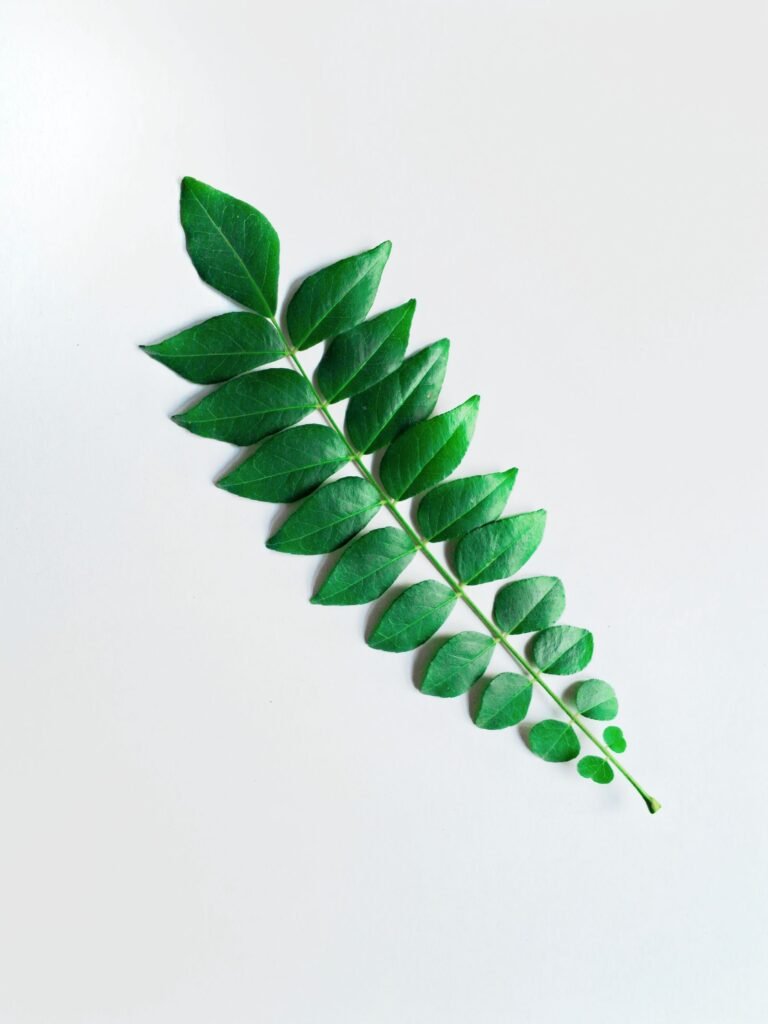
Walk into any Indian kitchen and you will find a small bunch of curry leaves — kadi patta — next to the tadka ingredients, usually thought of as a flavouring for dal and poha. But for generations, Indian grandmothers have also used curry leaves for hair, pressing them into oil or grinding them into a paste for the scalp. Curry leaves benefits for hair growth are talked about a lot. Do they help hair grow? This guide looks at what is in curry leaves, the four best ways to use them, how long results take, and the honest limits.
Why Curry Leaves Help Your Hair
Curry leaves are not magic, but they are genuinely rich in things hair needs. They contain beta-carotene, a form of vitamin A that helps the scalp produce sebum, its natural oil. They are also a good source of iron — dried curry leaves contain around 12 mg of iron per 100 g. A clinical study found plant-based iron from curry leaves improved haemoglobin in adults with low iron. You can read that study here: https://pmc.ncbi.nlm.nih.gov/articles/PMC12640369/
Iron matters for hair because low iron is one of the most common reasons for hair fall in Indian women. Curry leaves also have amino acids, the building blocks of keratin, plus antioxidants that protect the scalp. That mix is why curry leaves benefits for hair growth are talked about so much for hair — they feed the scalp while adding iron to your food.
Curry Leaves Benefits for Hair Growth: 4 Ways to Use Them
These are the four methods people actually use. Pick one and stick with it for at least 8 weeks.
1. Curry Leaf Oil
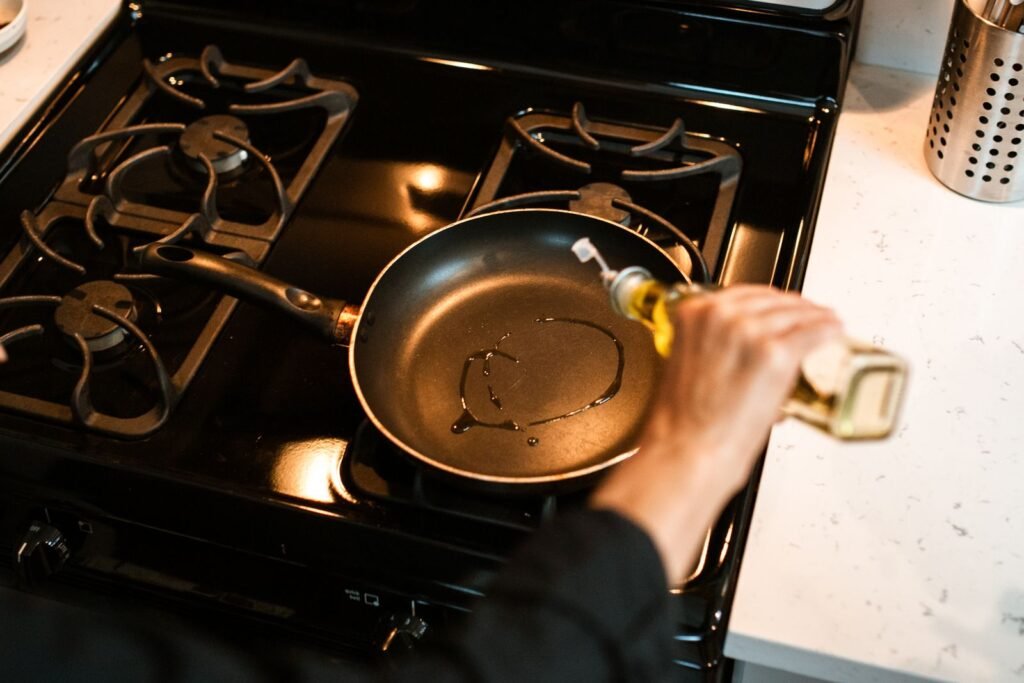
The most popular method, and the easiest to make at home. Heat half a cup of coconut oil (or sesame oil in winter) in a small pan on a low flame. Add a handful of washed curry leaves — about 20 to 25 leaves — and let them crackle gently for 3 to 4 minutes until the leaves turn dark and crisp. Take the pan off the heat, let it cool, and strain the oil into a clean bottle.
Massage 2 to 3 spoons into your scalp for 5 minutes, leave it for at least an hour (overnight is better), then wash with a mild shampoo. Use it twice a week. Some people mix curry leaves with bhringraj for a stronger oil — here is how bhringraj oil works and how to use it: https://wellhealthsorganic.com/bhringraj-oil-for-hair-benefits-how-to-use/
2. Curry Leaf Hair Mask
For a deeper treatment, grind a handful of fresh curry leaves with 2 spoons of curd and a spoon of fenugreek seeds soaked overnight into a smooth paste. Apply it to the scalp and along the hair, leave it for 30 minutes, and wash it off with a mild shampoo. The curd adds moisture, fenugreek adds protein, and the curry leaves feed the scalp. Use this mask once a week.
3. Curry Leaf Water Rinse
This is the simplest method and a good one for people who do not like oiling. Boil a handful of curry leaves in 2 cups of water for 10 minutes, let it cool, and strain it. After your normal hair wash, pour this water over your scalp as a final rinse. Do not wash it out. It leaves the scalp feeling fresh. Use it 2 to 3 times a week.
4. Eating Curry Leaves
Do not throw the leaves out of your tadka. Eating curry leaves — in dal, poha, chutney, or even a few leaves chewed in the morning — gives your body iron, folate, and antioxidants from the inside. A spoon of curry leaf powder mixed into buttermilk or dal is an easy daily habit. Food alone will not fix hair fall from thyroid or low vitamin D, but it supports the diet hair needs.
How Long Before You See Results?
Hair grows slowly — about 1 cm a month — so no remedy shows results in a week. With regular use, most people notice less hair fall in the shower after 4 to 6 weeks, and new baby hairs along the hairline after 8 to 12 weeks. That is the real timeline for curry leaves benefits for hair growth — slow and steady. If you do not see any change after 3 months, the cause is probably something else — low iron, thyroid, vitamin D, stress, or hard water — and it is worth getting checked. Hard water is a common culprit — this scalp care guide explains how it affects hair: https://wellhealthsorganic.com/scalp-care-routine-dandruff-hard-water/
Curry Leaves for Premature Greying
One of the most common claims about curry leaves benefits for hair growth is that curry leaves stop grey hair. Lab studies have shown that curry leaf extract can increase tyrosinase activity, the enzyme that makes melanin, the pigment that gives hair its colour. But this was in lab dishes, not on people’s heads. In practice, curry leaf oil may slow down new greying in young people, but it cannot turn hair that is already grey back to black — no oil can, because the hair shaft is dead protein with no living cells. If greying runs in your family, it is mostly genetic.
Curry Leaves for Dandruff
Dandruff is a scalp problem — flakes, itching, and a dry or oily scalp. Curry leaves benefits for hair growth also cover dandruff: curry leaves have mild antifungal properties, and the oil massage helps loosen flakes and moisturise the scalp. Use the curry leaf oil twice a week, and wash with a mild shampoo. Severe dandruff — thick yellow flakes or red patches — may be seborrheic dermatitis, and needs a medicated shampoo or a dermatologist.
Who Should Be Careful
Curry leaves are safe for most people, but a few things are worth knowing. Do a patch test first — apply a little oil behind your ear and wait 24 hours. If you get itching or redness, do not use it. And set your hopes right about curry leaves benefits for hair growth: curry leaves can support hair health, but they will not cure baldness, alopecia, or hair loss caused by hormones or illness. Losing hair in patches or a fast-receding hairline needs a dermatologist early.

Frequently Asked Questions
Can I apply curry leaves on my hair daily?
You can, but twice a week is enough. Daily oiling can make the scalp greasy and attract dust.
How long should I keep curry leaf oil on my hair?
At least an hour. Overnight is best. Wash it out with a mild shampoo — do not leave oil on for more than a day.
Do curry leaves stop grey hair?
They may help slow new greying, but they cannot reverse hair that is already grey. The evidence is from lab studies, not human trials.
Can I eat curry leaves every day?
Yes — a few leaves in your food every day is safe and healthy. It is one of the easiest ways to get iron and antioxidants from your diet.
Which is better for hair growth, curry leaves or rosemary oil?
Both are useful. Rosemary oil has stronger clinical evidence, while curry leaves are a gentler, cheaper daily option. Many people use both. Here is what the evidence says about rosemary oil and how to use it safely: https://wellhealthsorganic.com/rosemary-oil-for-hair-growth-evidence-how-to-use-safely/
The Bottom Line
Curry leaves are one of the few kitchen ingredients that deserve their reputation for hair — not because they work miracles, but because they are cheap, easy to use, rich in iron and antioxidants, and they make the scalp healthier over time. That is the honest picture of curry leaves benefits for hair growth: useful support for your scalp, not a cure for hair loss. Pick one method, use it for 8 to 12 weeks, and judge the results honestly. If your hair fall has a deeper cause, no oil will fix it — see a dermatologist.
Disclaimer: This article is for general information only and is not medical advice. If you have a health condition, are pregnant, or take regular medicine, please consult a doctor before trying any home remedy.