
Winter in India brings cool mornings, fog in the north, and, for many families, a season of colds and coughs. A child comes home from school with a runny nose, an elder starts coughing at night, and the whole house reaches for the same familiar remedies: ginger tea, honey, steam, and kadha. These home remedies for cold and cough are part of Indian home care for a reason — they are simple, cheap, and they make you more comfortable while a cold runs its course.
That last point matters. A common cold is caused by a virus, and no home remedy, medicine, or supplement cures it. Most colds get better on their own in seven to ten days. What home remedies can do is ease a sore throat, loosen congestion, help you sleep, and encourage rest and fluids — and that is genuinely useful. What they cannot do is treat a serious chest infection, flu, or pneumonia, or replace medical care when warning signs appear. This article gives you a practical winter kit, with exact simple recipes, what to avoid giving children, and the red flags that mean it is time to see a doctor.
Home Remedies for Cold and Cough: The Winter Kit
You do not need a special shopping trip. Most of what you need is already in an Indian kitchen. Keep these on hand from November onwards:
- Fresh ginger, a small piece
- Honey (for adults and children over one only)
- Tulsi leaves, fresh or dried
- Turmeric, black pepper, cinnamon, and cloves
- Ajwain (carom seeds) and rock salt
- A clean towel and a bowl for steam
- Warm water, and a flask to keep kadha or tea hot
- A thermometer, so you can check a fever properly instead of guessing
Store ginger in the fridge, honey in a cool cupboard, and spices in airtight jars. A thermometer is the one item many homes do not have, and it is the most useful: it tells you whether a fever is mild or high, and whether it is coming down, which is information a doctor will ask for.
Ginger-Honey Tea: Recipe and How to Use It
Ginger-honey tea is the first remedy most Indian families reach for, and it is a good one for a sore throat and a mild cough. Ginger is warming and soothing, honey coats the throat, and a hot drink encourages fluids and rest.
Ginger-honey tea (1 cup)
- 1 cup (about 200 ml) water
- 1 small piece of fresh ginger (about 2 cm), sliced or grated
- 1 teaspoon honey (for adults and children over one only)
- Optional: 4–5 tulsi leaves, or a squeeze of lemon
Method:
- Bring the water to a boil in a small pan.
- Add the ginger and tulsi leaves, if using, and simmer gently for 5 minutes.
- Strain into a cup and let it cool for a minute or two, until it is comfortably warm.
- Add the honey and lemon, if using, and stir. Drink it warm, slowly.
Drink one to two cups a day when you have a cold. Do not add honey to boiling-hot tea — wait until it has cooled slightly. If you have acidity, keep the ginger light, as too much ginger can worsen heartburn. For children over one, make it milder, with less ginger and a smaller amount of honey, and serve it in a small cup.
Honey has some evidence behind it: a few studies have found that a spoon of honey before bed may help children over one and adults cough less at night, probably because it coats and soothes the throat. It is not a cure, but it is a pleasant, low-cost option. Never give honey to a baby under one year old, as it carries a small but serious risk of infant botulism, a rare form of food poisoning that can be dangerous for babies.
Steam Inhalation: How to Do It Safely
Steam is one of the simplest ways to ease a blocked nose and a congested chest. Warm, moist air loosens mucus and soothes irritated airways, and it can help you breathe more easily for a while after.
How to take steam safely:
- Boil water and pour it into a wide, stable bowl on a table. Let it cool for a minute so it is steaming, not boiling.
- Sit comfortably, lean over the bowl at a safe distance, and drape a towel over your head and the bowl to trap the steam.
- Breathe in slowly through your nose and out through your mouth for 5–10 minutes.
- Keep your face at least 30 cm (about a foot) from the water. If it feels too hot, lift the towel and move back.
- Do this once or twice a day, and drink a glass of water afterwards.
You can add a few tulsi leaves, a small piece of ginger, or a pinch of ajwain to the water, but plain steam works well on its own. Do not add strong essential oils, Vicks, or eucalyptus oil to steam for young children without a doctor’s advice, as they can irritate small airways.
Steam is safe for most adults and older children, but take care with burns — hot water is the main risk, not the steam itself. Never leave a child alone with a bowl of hot water. For very young children, a safer option is to sit with them in a steamy bathroom: run a hot shower with the door closed for a few minutes, and sit in the warm, steamy air together. Do not put a baby’s face over a bowl of hot water.
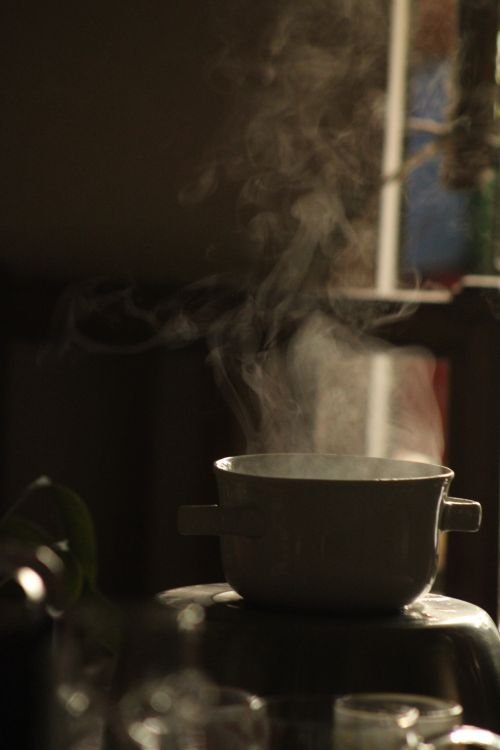
Kadha: A Traditional Winter Decoction
Kadha is the traditional spiced decoction many Indian families make in winter, especially when someone has a cold. There are many versions, and every family has its own recipe. Here is a simple, mild one that works well.
Simple kadha (2 cups)
- 2 cups (about 400 ml) water
- 1 small piece of fresh ginger, grated
- 4–5 tulsi leaves
- 2–3 black peppercorns, lightly crushed
- 1 small stick of cinnamon (or a pinch of cinnamon powder)
- 2 cloves
- Optional: ½ teaspoon turmeric, a pinch of ajwain
- Honey or jaggery to taste, added after the kadha cools slightly
Method:
- Put the water, ginger, tulsi, pepper, cinnamon, cloves, and ajwain in a pan.
- Bring to a boil, then simmer on a low flame for 8–10 minutes, until the liquid reduces to about one and a half cups.
- Strain into cups, let it cool for a minute, and add honey or jaggery if you like.
- Drink it warm, once a day, when you have a cold.
Kadha is warming and comforting, and the spices have traditional uses for coughs and colds. It is not a medicine, and it does not cure a viral infection, but a hot, spiced drink can help you feel better, sleep better, and take in fluids. Keep it mild — too much pepper or ginger can irritate the throat and worsen acidity. If you have diabetes, skip the jaggery and honey. If you are pregnant or take regular medicines, ask your doctor before drinking kadha daily, as some of the spices in large amounts can interact with medicines.
Rest, Fluids, and Food
Home remedies work best alongside the basics, which are easy to forget when you are ill. Rest is the most important: a cold is your body’s signal to slow down, and pushing through work or school usually makes it last longer. If you have a fever, stay at home, rest, and avoid spreading the cold to others.
Fluids matter too. Drink water, warm soups, dal ka pani, or coconut water through the day. Warm fluids are especially soothing for a sore throat. Avoid alcohol, which dehydrates you and disturbs sleep, and keep caffeine to a minimum.
Food should be light and easy to digest: khichdi, dal-rice, vegetable soup, toast, and curd are all good choices. There is no need for a special “cold diet,” and there is no food that cures a cold. Eat what you feel like, in small amounts, and do not force yourself to eat a heavy meal if you have no appetite.

What to Avoid
Some common practices do more harm than good, or are simply not helpful:
- Honey for babies under one: Never give honey to a baby under one year old, for any reason. The risk is small but serious.
- Antibiotics for a cold: A cold is caused by a virus, and antibiotics do not work against viruses. Taking antibiotics without a doctor’s advice will not help a cold, and it can cause side effects and contribute to antibiotic resistance. Only take antibiotics if a doctor prescribes them.
- Strong cough syrups for young children: Many cough syrups are not recommended for young children, and some can cause drowsiness or other side effects. Do not give a child a cough syrup, especially one meant for adults, without a doctor’s or pharmacist’s advice.
- Very hot steam or hot drinks for children: Burns are a real risk. Always test the temperature, keep hot water out of a child’s reach, and supervise steam inhalation.
- Smoking and smoke: Avoid smoking, and keep a person with a cold away from smoke, dust, and strong fumes, which worsen coughing.
- Overdoing remedies: Drinking kadha five times a day, taking steam for an hour, or combining many different remedies is not better than one or two done well. More is not more, and too much ginger, pepper, or turmeric can upset the stomach and worsen acidity.
If you are unsure about a remedy, a medicine, or a dose for a child, ask a pharmacist or a doctor. A quick question is always better than a guess.
When to See a Doctor: Red Flags
Most colds get better on their own, but some symptoms need medical care. See a doctor promptly if you or your child has any of the following:
- Breathlessness, wheezing, or difficulty breathing, or lips turning blue
- High fever — above 102°F (38.9°C) in an adult, or above 100.4°F (38°C) in a baby under three months — or a fever that lasts more than three days, or that comes back after getting better
- Chest pain, or a cough that brings up blood
- Symptoms lasting over 10 days without improvement, or a cold that seems to get better and then gets worse again
- Severe headache, stiff neck, or confusion
- Dehydration — very little urine, a dry mouth, dizziness, or, in a baby, fewer wet nappies than usual
- A baby under three months with any fever, or a child who is unusually sleepy, irritable, or refusing to drink
- A cough that lasts more than three weeks, or a cough with a whooping sound
- An existing condition that makes a cold riskier — asthma, diabetes, heart disease, a weak immune system, or pregnancy — and symptoms are worsening
Do not wait for these signs to pass. A doctor can check whether the problem is a simple cold or something that needs treatment, such as flu, a bacterial infection, or pneumonia. If you are ever unsure whether to seek care, it is always better to call a doctor or visit a clinic and be told it is just a cold, than to wait and miss something serious.
Frequently Asked Questions
How long does a winter cold usually last?
Most colds last seven to ten days. The worst symptoms are usually in the first two to three days, and then they fade gradually. A cough can linger for two to three weeks after the rest of the cold has gone. If symptoms last over ten days without improvement, see a doctor.
Can I give honey to my child for a cough?
Yes, if your child is over one year old. A small spoon of honey, or honey in warm ginger tea, may help a child cough less at night. Never give honey to a baby under one, and do not give cough syrup to a young child without a doctor’s advice.
Is kadha safe to drink every day in winter?
A mild kadha once a day in winter is a common home habit and is generally fine for most healthy adults. Keep the spices light, skip the sweetener if you have diabetes, and ask your doctor first if you are pregnant or take regular medicines.
The Bottom Line
Winter colds are a normal part of the season, and Indian home remedies — ginger-honey tea, steam, kadha, rest, and fluids — are a practical, low-cost way to feel more comfortable while a cold runs its course. They are not cures, and they are not a substitute for medical care. Keep a simple winter kit at home, use one or two remedies well rather than many at once, never give honey to a baby under one, and know the red flags: breathlessness, high fever, symptoms lasting over ten days, and any sign of dehydration or worsening illness. With those in mind, you can look after a winter cold at home with confidence, and know when to call a doctor.
Disclaimer: This article is general information only and is not medical advice. It does not diagnose or treat any condition. See a doctor for diagnosis, or before starting a supplement or treatment, especially for a baby, a child with a fever, or anyone with breathlessness, a high fever, or symptoms lasting over 10 days.