

You went to bed on time, you were in bed for eight hours — and you still woke up tired. If that sounds familiar, the problem is probably not how long you sleep, but how you sleep. Most of us make small mistakes every night without realising it: the phone in bed, the late cup of tea, the heavy dinner, the weekend lie-in that feels like a reward but ruins Monday.
Learning how to fix sleep mistakes is easier than most people think. You do not need sleeping pills, expensive gadgets or a new mattress. In most cases, a few small changes to your evening habits are enough to fall asleep faster, sleep more deeply and wake up genuinely rested.
This guide explains why sleep matters, 10 common sleep mistakes and exactly how to fix each one, a simple evening routine you can start tonight, and the warning signs that mean it is time to see a doctor.
Why Sleep Matters
Adults need 7 to 9 hours of sleep a night, according to most health authorities — and it is not just about feeling rested. Sleep is when your body repairs muscles, strengthens the immune system, stores memories and clears waste from the brain. Good sleep helps you think clearly, manage your weight, control your blood sugar and keep your mood steady.
Poor sleep does the opposite. Even a few nights of short or broken sleep can leave you irritable, forgetful and hungry for sugary food. Over months and years, regularly sleeping less than 7 hours is linked to weight gain, high blood pressure, type 2 diabetes, heart disease and a weaker immune system. That is why the habits around sleep matter as much as the hours themselves — and why knowing how to fix sleep mistakes is a health skill, not a luxury.
The good news is that most sleep problems are habit problems, and habits can be changed. Here are the 10 mistakes that ruin sleep most often, and the fix for each one.
How to Fix Sleep Mistakes: 10 Common Mistakes and Their Fixes
1. Keeping an Irregular Bedtime — and Sleeping In on Weekends
The first mistake is the most common: going to bed at 11 pm one night, 1 am the next, and then sleeping until noon on Sunday to “catch up”. Your body runs on an internal clock, the circadian rhythm, which expects sleep and waking at roughly the same time every day. When bedtimes shift by hours, the clock gets confused — you feel sleepy at the wrong time and wide awake at bedtime.
Weekend catch-up sleep does not fix the damage. Sleeping in on Saturday and Sunday shifts your clock later, so Monday morning feels like jet lag — a pattern sleep doctors call “social jet lag”. You cannot bank sleep in advance or repay a week’s debt in one long lie-in.
The fix: Pick one bedtime and one wake-up time and keep them every day, including weekends, within about 30 minutes. Of the two, the wake-up time matters more — anchor it, and your body will start feeling sleepy at the right time in the evening. If you are short on sleep during the week, add 30 to 60 minutes to your bedtime rather than sleeping in by hours on the weekend. Mayo Clinic’s sleep tips give the same advice: stick to a sleep schedule, even on weekends, because consistency strengthens your body’s sleep-wake cycle.
2. Using Screens Right Before Bed
Scrolling on your phone, watching videos or answering messages in bed is the second big mistake. Screens do two kinds of damage: the blue light they give off tells your brain it is still daytime and suppresses melatonin, the hormone that makes you sleepy; and the content itself — news, arguments, exciting videos — keeps your mind alert when it should be winding down.
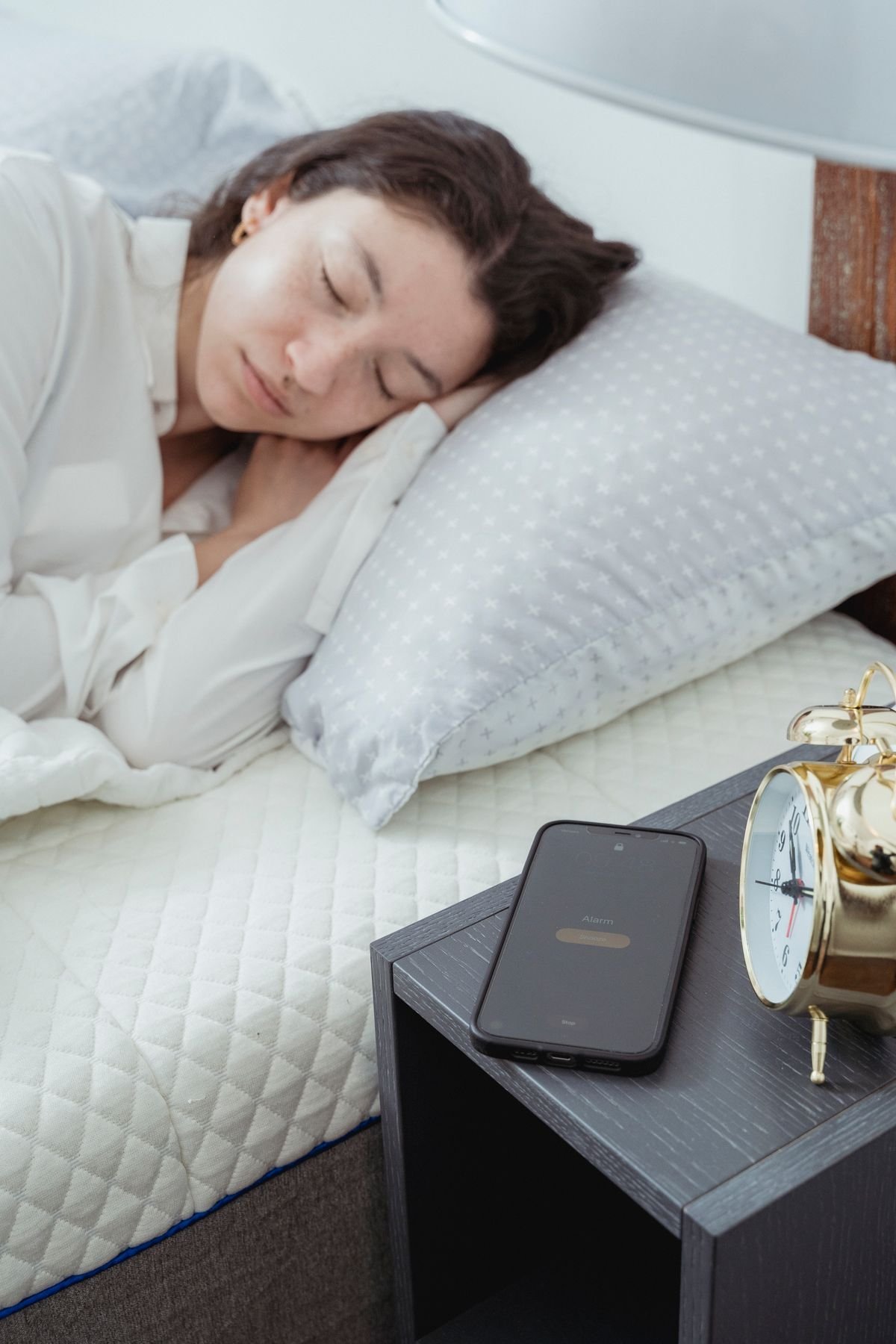
The fix: Stop using screens 30 to 60 minutes before bed. Learning how to fix sleep mistakes like this one starts with a simple rule: charge your phone outside the bedroom if you can, or at least across the room where you cannot reach it without getting up. Use that last hour for something calm instead: reading a paper book, stretching, or a warm shower. If you must use a screen in the evening, turn on night mode and lower the brightness, but know that this only helps a little — the real fix is putting the screen away. A young woman sleeping with a smartphone beside her bed is a familiar sight, but that phone is often the reason she took an hour to fall asleep.

3. Drinking Caffeine Too Late
Caffeine is not just in coffee. Tea, cola, energy drinks, chocolate and some painkillers all contain it, and caffeine stays in your body far longer than most people realise — its half-life is about 5 to 6 hours, which means a cup of coffee at 4 pm still leaves half its caffeine in your system at 10 pm. That is enough to delay sleep, make it lighter, and cut down the deep sleep your body needs most.
The fix: Set a caffeine cut-off time of at least 8 hours before bed. One of the simplest answers to how to fix sleep mistakes is this cut-off: if you sleep at 11 pm, your last tea or coffee should be around 3 pm. Switch to herbal tea, warm milk or plain water in the evening. And check the hidden sources: that “small” cup of chai after dinner, the cola with your evening snack, and the chocolate dessert all count. If you need an evening drink, a traditional cooling drink is a better choice — our guide on sattu benefits for weight loss explains how this roasted gram drink is traditionally prepared, and it contains no caffeine at all.
4. Eating a Big, Heavy Dinner Late at Night
A large, spicy or fatty dinner close to bedtime forces your body to digest food when it should be resting. Digestion raises your body temperature and keeps your stomach working for hours, which makes it harder to fall asleep and can cause heartburn and acid reflux when you lie down. Late heavy meals are also linked to poorer sleep quality and weight gain.
The fix: Eat dinner at least 2 to 3 hours before bed, and keep it light and warm — soup, khichdi, vegetables with roti, or a small portion of dal and rice. Another part of how to fix sleep mistakes is dinner timing: avoid very spicy, fried or creamy food late at night, and skip the heavy dessert. If you feel hungry before bed, a small light snack is fine: a few dates, a banana, or a small bowl of curd. Our guide on the benefits of eating dates daily explains how many to eat and the best time — dates are a gentle, natural evening snack. The same idea comes from tradition: our guide to an ayurveda dinner explains why dinner should be light, warm and early, which is good for both digestion and sleep.
5. Napping Too Long or Too Late in the Day
A nap is not always a mistake — a short nap can be refreshing. But a long nap, or a nap taken late in the afternoon, steals sleep from the night. Napping for an hour at 5 pm reduces the sleep pressure your body builds up during the day, so by 11 pm you simply are not sleepy enough to fall asleep.
The fix: If you nap, keep it short — 20 to 30 minutes — and take it before 3 pm. When people ask how to fix sleep mistakes, naps are often overlooked, yet a long late nap is one of the easiest mistakes to correct. Set an alarm so the nap does not stretch into an hour. If you regularly feel the need for a long afternoon nap, it is a sign that your night sleep is not good enough, and fixing your night sleep is the real answer. And if you cannot fall asleep at night, do not compensate with a long evening nap the next day — it only continues the cycle.
6. Sleeping in a Bright, Noisy or Warm Bedroom
Your bedroom should be dark, quiet and cool — but for many people it is none of those. Street lights through thin curtains, a glowing charger, a noisy fan or traffic outside, and a warm room all make sleep lighter and more broken. Light is the strongest signal to your brain: even a small amount of light at night can suppress melatonin and disturb sleep. Temperature matters too — your body needs to cool down to fall asleep, and a hot room fights that process.
The fix: Make your bedroom as dark as you can — blackout curtains or a sleep mask, and cover or switch off any glowing lights. Knowing how to fix sleep mistakes often starts in the bedroom itself: keep the room cool, ideally around 18 to 20°C (65 to 68°F); a fan or open window usually does the job. For noise, earplugs work well, or a steady fan sound that masks sudden noises. Keep the bed for sleep only — not for working, eating or watching videos — so your brain learns that bed means sleep. Cleveland Clinic’s tips to get more deep sleep make the same point: the best bedroom for deep sleep is cool, dark and quiet, like a cave.

7. Using Alcohol as a Nightcap
A drink in the evening may make you feel drowsy, but alcohol is one of the worst things for sleep quality. It helps you fall asleep faster, then fragments your sleep for the rest of the night: it suppresses REM sleep, the dreaming stage that helps memory and mood, causes you to wake up more often, and makes snoring and sleep apnea worse. The result is that you spend enough hours in bed but wake up unrefreshed.
The fix: Avoid alcohol in the evening altogether if you can. If you are wondering how to fix sleep mistakes caused by a nightcap, the answer is simple: stop drinking at least 3 to 4 hours before bed and keep the amount small. Do not use alcohol as a sleep aid — it is a loan that your sleep repays with interest later in the night. And remember that alcohol also affects the liver, which does much of its repair work overnight — our fatty liver diet plan for Indian vegetarians lists foods and habits that support liver health, and cutting back on evening alcohol is one of the simplest of them.
8. Exercising Too Close to Bedtime
Exercise is one of the best things you can do for sleep — but timing matters. A hard workout raises your body temperature, heart rate and adrenaline for hours, which is the opposite of what your body needs to fall asleep. A late-evening gym session or an intense run at 9 pm can easily delay sleep by an hour or more.
The fix: Finish vigorous exercise at least 3 hours before bed. Morning or afternoon exercise is best for sleep, and timing your workouts earlier is a practical part of how to fix sleep mistakes without giving up exercise. In the evening, choose gentle movement instead: a slow walk after dinner, light stretching, or a few minutes of deep breathing. These calm the body rather than waking it up, and a short walk after dinner also helps digestion. Regular daytime exercise is still one of the strongest sleep aids there is — just keep the intense sessions earlier in the day.
9. Sleeping With Phone Notifications On
Even if you put the phone down, a phone that buzzes, lights up or rings during the night breaks your sleep. A single notification can pull you out of deep sleep, and once you check it, the blue light and the content wake your brain up fully. Many people do not even remember these brief awakenings in the morning — they just feel tired for no obvious reason.
The fix: Put your phone on silent and Do Not Disturb from bedtime until morning, and turn the screen face down. This small step is one of the easiest answers to how to fix sleep mistakes: better still, charge it outside the bedroom and use a simple alarm clock instead. If you use your phone as your alarm, set the alarm before bed, then switch on Do Not Disturb and leave the phone face down across the room. You will still hear the alarm in the morning, but nothing else will disturb you during the night.
10. Ignoring Loud Snoring and Sleep Apnea
The last mistake is the most serious: ignoring loud snoring, gasping during sleep, or waking up with a headache and a dry mouth. These can be signs of sleep apnea, a condition in which breathing stops and starts many times during the night. Each pause briefly wakes the brain, so sleep is broken into fragments all night long — even though the person often does not remember waking up. Untreated sleep apnea is linked to high blood pressure, heart disease, diabetes and daytime accidents.
The fix: Do not dismiss loud, regular snoring as normal — especially if it comes with pauses in breathing, gasping, morning headaches, or feeling sleepy during the day despite a full night in bed. Ask your partner or family whether you snore or stop breathing in your sleep. Losing weight, avoiding alcohol in the evening, and sleeping on your side can help mild snoring, but suspected sleep apnea needs a doctor and a sleep study. This is not a habit you can fix with willpower — it needs medical attention, and treating it can transform how rested you feel.
A Simple Evening Routine That Works
Fixing all 10 mistakes at once is too much. Instead, build one simple routine and follow it for two weeks — that is how long it takes for a new sleep pattern to start feeling natural. Putting how to fix sleep mistakes into practice looks like this:
- 7 pm: Eat a light dinner, then take a short walk.
- 8 pm: Last tea or coffee is already past — switch to water or herbal tea.
- 9 pm: Dim the lights, stop working, and put screens away.
- 9:30 pm: Warm shower, light stretching, or a few pages of a book.
- 10:30 pm: Bedroom dark, cool and quiet; phone on silent across the room.
- 11 pm: Lights out, same time every night.
If you cannot fall asleep within about 20 minutes, do not lie there getting frustrated. Get up, go to another room, and do something calm and boring in dim light — read a dull book, listen to quiet music — until you feel sleepy, then return to bed. Lying awake in bed teaches your brain that bed is a place for worrying, not sleeping. Healthline’s guide to healthy sleep gives the same advice: if sleep does not come, get up and do something relaxing, and return to bed only when you feel drowsy.
When to See a Doctor
Most sleep problems improve with the fixes above, but some need medical help. Knowing how to fix sleep mistakes also means knowing when habits are not enough. See a doctor if you have any of these:
- Insomnia lasting more than 3 weeks: Difficulty falling asleep or staying asleep most nights, despite good sleep habits.
- Loud snoring with pauses in breathing or gasping: Possible sleep apnea — it needs a sleep study.
- Falling asleep during the day: Nodding off at work, while driving, or in the middle of conversations.
- Restless legs: An uncomfortable urge to move your legs at night that keeps you awake.
- Sleepwalking, night terrors or acting out dreams: These can be signs of a sleep disorder.
- Waking up with a headache, dry mouth or sore throat most mornings: Another possible sign of sleep apnea.
- Mood or memory problems that do not improve with better sleep: Poor sleep and low mood often feed each other, and both deserve help.
Do not drive when you are very sleepy, and do not start sleeping pills on your own — they can help short-term, but they need a doctor’s guidance, and they do not fix the habits that caused the problem.
FAQs — How to Fix Sleep Mistakes
What is the biggest sleep mistake?
The biggest mistake is an irregular schedule — different bedtimes every night and long lie-ins on weekends. It confuses your body clock more than any single habit, and fixing it often improves everything else. That is the first step in how to fix sleep mistakes.
How long does it take to fix bad sleep habits?
Most people notice some improvement within a week of keeping a fixed bedtime and cutting late caffeine and screens. A stable new pattern usually takes 2 to 4 weeks. Be patient — your body clock changes slowly, but it does change.
Is it bad to sleep with the phone next to the bed?
Yes, for two reasons: notifications can wake you during the night, and having the phone within reach makes it tempting to check it when you cannot sleep. Charging it across the room, or outside the bedroom, is one of the simplest fixes.
Can I catch up on sleep at the weekend?
Only partly. A weekend lie-in repays a small sleep debt, but sleeping in by hours shifts your body clock later and makes Monday worse. A better plan is to go to bed 30 to 60 minutes earlier on weeknights.
What should I eat before bed?
Keep it small and light: a banana, a few dates, a small bowl of curd, or a glass of warm milk. Avoid heavy, spicy or sugary food, and skip caffeine. A natural sweetener like jaggery is traditional in evening drinks, but it is still sugar — our guide on jaggery benefits explains how it compares with refined sugar.
Does exercise help sleep?
Yes — regular exercise is one of the best sleep aids. But do it in the morning or afternoon, not close to bedtime. A hard workout late in the evening can delay sleep, so keep evenings for gentle movement like walking or stretching.
When should I see a doctor about sleep?
See a doctor if insomnia lasts more than 3 weeks, if you snore loudly with pauses in breathing, if you fall asleep during the day, or if you have restless legs or morning headaches. These can be signs of a sleep disorder that needs treatment.
Conclusion
Learning how to fix sleep mistakes is not complicated: keep the same bedtime and wake-up time every day, put screens away before bed, stop caffeine by mid-afternoon, eat a light dinner early, keep naps short, make your bedroom dark, cool and quiet, skip the nightcap, exercise earlier in the day, silence your phone, and take loud snoring seriously.
You do not need to fix all 10 at once. Start with the two that matter most — a fixed wake-up time and no screens in the last hour — and add one more each week. Within a month, most people fall asleep faster, wake up less during the night, and feel properly rested in the morning. Good sleep is not a luxury; it is the foundation your whole day is built on, and a few small changes tonight can start rebuilding it.
Disclaimer: This article is for general health information only and is not a substitute for medical advice. If you have insomnia lasting more than 3 weeks, loud snoring with pauses in breathing, gasping during sleep, excessive daytime sleepiness, restless legs, or any medical condition, see a doctor promptly. Do not start or stop sleep medicine without medical guidance. Raw banana flour is another food that supports gut health through its resistant starch — our guide on raw banana flour benefits explains how it works and how to use it.