
Search for natural ways to ease a cold, calm an upset stomach or look after your skin, and you will probably meet the phrase WellHealthOrganic Home Remedies Tag sooner or later. It appears on health blogs and wellness pages, and it often comes with promises of simple, kitchen based solutions. But what does the phrase actually mean? Is it an official label, a product line or just a way of grouping articles?
This guide answers those questions in plain language. It explains what the tag refers to, which kinds of remedies usually appear under it, what science says about popular ingredients and where caution is needed. The aim is to help you read this type of content with a clear head so that you can enjoy the benefits of everyday natural care without taking unnecessary risks.
What Is the WellHealthOrganic Home Remedies Tag?
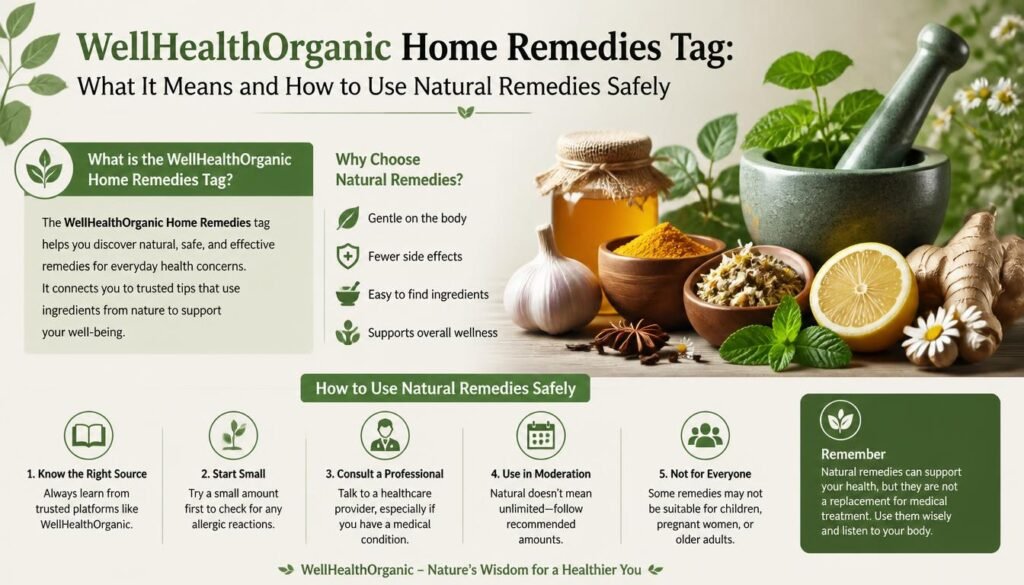
Despite the official sounding name, the WellHealthOrganic Home Remedies Tag is not a medical certification or a government approved seal. Most sources describe it as a category that groups natural wellness tips, herbal ideas and do it yourself treatments for everyday health concerns. In website terms, a tag is simply a label that organizes related articles under one heading so readers can find them easily.
Some pages describe it in broader terms, as a labeling system that sorts remedies by the health issue they address. In that picture, each entry explains which problem a remedy is meant for, such as digestion, immunity, skin or stress. Either way, the practical meaning is the same. When you click this tag on a health site, you land on a collection of articles about natural approaches to common problems, usually based on foods, herbs and spices.
It helps to remember that these collections vary a lot from site to site. Because many different websites use the same phrase, the quality, accuracy and tone of the content can differ widely. One page may be careful and balanced, while another may promise miracle results. That is why understanding the topic yourself matters more than trusting any single label.
Why Home Remedies Are So Popular
Home remedies have a long history across many cultures. Families have used ginger tea for an upset stomach, warm honey drinks for a sore throat and turmeric in food for generations. These traditions are passed down because they are accessible, affordable and familiar. You often do not need to visit a pharmacy, since the ingredients are already in the kitchen.
Today there are extra reasons for their popularity. Rising healthcare costs push people to look for low cost options for minor problems. Many readers also want to avoid unnecessary medicines for mild symptoms, and others simply enjoy cooking with ingredients they recognize. Content under the home remedies tag speaks to this interest by offering gentle, low tech ideas that fit into daily routines.
At the same time, popularity is not proof of effectiveness. Some traditional remedies have supporting research, others have limited evidence, and a few can even cause harm when used the wrong way. A smart reader keeps all three possibilities in mind.
Common Types of Remedies Found Under the Tag
Articles under this heading usually fall into a handful of practical areas. Looking at them one by one makes the topic easier to understand.
Immunity and Seasonal Colds
This is probably the most common theme. Pages often discuss warm drinks, ginger, honey, garlic and turmeric as ways to feel better during colds and flu season. Comforting fluids and rest do help the body cope with mild illnesses, and warm liquids can soothe a scratchy throat. However, no food can guarantee that you will avoid infection, and phrases such as boosting immunity are often used loosely.
Digestive Health
Digestion is another favorite subject. Ginger, cumin water, fennel seeds, peppermint and buttermilk appear frequently in articles about bloating, acidity and indigestion. Some of these ingredients have long traditional use, and a few, such as ginger for nausea, have been studied. Yet persistent stomach pain, repeated vomiting or blood in stool are signs that need medical attention, not a kitchen remedy.
Skin and Hair Care
Aloe vera, honey, turmeric masks and natural oils are standard in this category. For minor dryness or mild sunburn, aloe vera gel is widely used and generally well tolerated. Still, plant ingredients can cause allergic reactions or irritation, so a small patch test on a limited area of skin is a sensible first step.
Stress and Sleep
Herbal teas, simple breathing habits and calming routines also appear under the tag. A warm cup of tea in the evening and a regular bedtime can support relaxation. These approaches may help with everyday tension, but they are not a substitute for professional help when anxiety, low mood or poor sleep last for weeks.
Aches and Joint Comfort
Warm compresses, gentle movement and ingredients such as turmeric are frequently mentioned for muscle or joint discomfort. Heat can ease stiff muscles, and light activity often helps. Ongoing pain, swelling or limited movement should be checked by a doctor.
What Do Popular Ingredients Actually Do?
Looking at the most common kitchen ingredients helps separate realistic benefits from exaggerated claims.
Ginger is perhaps the best known. Research suggests it may help with nausea, including nausea linked to pregnancy and motion, though people who are pregnant should speak to a healthcare professional before using it regularly. Ginger tea is also a pleasant warm drink when you feel unwell.
Honey has a good reputation for soothing coughs and sore throats, and some studies suggest it can reduce nighttime cough in children. An important safety rule applies here: honey should never be given to babies under twelve months, because it can carry bacteria that cause infant botulism.
Turmeric contains a compound called curcumin that scientists study for its anti inflammatory properties. Cooking with turmeric is generally safe, but the amount in food is small, and curcumin is poorly absorbed by the body on its own. High dose supplements are a different matter and may interact with certain medicines, including blood thinners.
Aloe vera gel is commonly used on the skin for minor burns and dryness. It should not be applied to deep wounds, and drinking aloe products without medical advice is not recommended for everyone.
Garlic, cumin, fennel and similar ingredients are valued in many cuisines. They are healthy parts of a balanced diet, but claims that a single ingredient can melt fat or cure a chronic condition are not supported by solid evidence. Some pages under this kind of tag, for example, promote raw garlic with honey for fast weight loss. Sustainable weight management depends on overall diet, activity and sleep, not on one miracle combination.
The Limits of Home Remedies
A good rule is that home remedies are best for mild, short lived problems and supportive comfort. They are not replacements for diagnosis, prescription treatment or emergency care. Several limits are worth knowing.
First, natural does not automatically mean safe. Plants contain active compounds, and those compounds can cause allergies, stomach upset or interactions with medicines. Second, evidence varies. Many traditional remedies have never been tested in large studies, so reports of success are often personal stories, not proof. Third, delay can be risky. Relying on a home remedy while a serious condition worsens can turn a manageable problem into a dangerous one.
Some pages that discuss the tag openly note that not every remedy is proven by science and suggest speaking to a doctor before trying them. That advice deserves to be taken seriously, especially if you have a long term condition, take regular medication, are pregnant or breastfeeding, or are caring for a young child.
When You Should See a Doctor
Certain symptoms should never be treated at home alone. These include a high or lasting fever, trouble breathing, chest pain, severe or worsening abdominal pain, confusion, repeated vomiting, signs of dehydration, a rash that spreads quickly or any symptom that lasts longer than expected or keeps returning. Sudden changes in children, older adults and people with chronic illness deserve quick medical advice.
If you are unsure whether a symptom is minor, it is always acceptable to ask a pharmacist or doctor. A short conversation can save a lot of worry, and it does not mean you must give up natural habits you enjoy.
How to Use Home Remedies Safely
A few simple habits make natural care much safer. Start with one remedy at a time so that you can notice how your body reacts. Test any topical ingredient on a small patch of skin before using it widely. Use clean utensils and fresh ingredients, and store prepared mixtures properly, since homemade preparations can spoil quickly.
Read about possible interactions if you take medicine. Turmeric, ginger, garlic and herbal teas can affect how some drugs work. Check the source of your information as well. Look for articles that mention evidence, explain limits and encourage medical advice when needed, instead of pages that promise cures or use dramatic language.
Finally, think of home remedies as part of a wider routine. Balanced meals, enough water, regular movement, good sleep and stress management do more for long term health than any single recipe.
How to Judge Content Under This Tag
Because the tag is used on many different websites, it pays to be a careful reader. Check who wrote the article and whether the author has a health background. Look at the publication date, since health guidance changes over time. Notice whether the page cites studies, health organizations or medical experts, and whether it explains risks as clearly as benefits.
Be cautious when you see strong promises such as instant results, guaranteed cures or secret formulas. Genuine health information tends to be measured and honest about uncertainty. If a claim sounds too good to be true, compare it with trusted sources such as public health agencies or established medical websites before you act on it.
Building a Simple Natural Wellness Routine
If you enjoy natural care, you can keep it practical. Start your day with a glass of water and a balanced breakfast. Add spices such as ginger, turmeric and cumin to everyday cooking in normal food amounts. Drink herbal tea in the evening if you like it, and keep a regular sleep schedule. Spend time outdoors, move your body most days and take small breaks to reduce stress.
During a mild cold, rest, fluids, warm soups and honey for adults and older children can add comfort. For the skin, gentle cleansing, moisturizing and sun protection come first, with natural extras as optional additions. These small, steady habits are easy to maintain and fit well with the ideas that the home remedies tag promotes.
Conclusion
The WellHealthOrganic Home Remedies Tag is best understood as a content category that gathers natural wellness ideas, from ginger tea and honey to aloe vera and turmeric, for common everyday concerns. It is not an official medical label, and the quality of articles under it depends on each website and writer.
Used wisely, simple home remedies can add comfort and support healthy routines. Used carelessly, they can create false confidence, delay proper care or cause reactions. The balanced approach is to enjoy traditional ingredients, stay realistic about what they can do, check claims against reliable sources and speak to a healthcare professional whenever symptoms are serious, persistent or unclear. With that mindset, natural remedies can be a pleasant and sensible part of everyday self care.
Frequently Asked Questions
What is the WellHealthOrganic Home Remedies Tag?
It is a category that groups natural health tips and home remedies on wellness websites. It usually covers topics such as immunity, digestion, skin care, stress and everyday comfort, using ingredients like ginger, honey, turmeric and aloe vera.
Is the WellHealthOrganic Home Remedies Tag an official health certification?
No. It is not a medical certification or government approved label. It works as a website category, so the quality of the information depends on each article and author.
Are home remedies safe for everyone?
Not always. Natural ingredients can cause allergies or interact with medicines, and some are unsuitable for babies, pregnant women or people with certain conditions. For example, honey should not be given to infants under twelve months.
Can home remedies replace medicine?
No. They can support comfort for mild, short term problems, but they should not replace diagnosis or prescribed treatment. See a doctor if symptoms are severe, long lasting or getting worse.
Which home remedies have scientific support?
Some have limited but real support, such as ginger for nausea, honey for soothing cough in older children and adults, and aloe vera gel for minor skin irritation. Many other claims have little solid evidence, so it is wise to check trusted health sources.
This article is general information and not medical advice, and I kept the claims cautious on purpose because it is a health topic.