
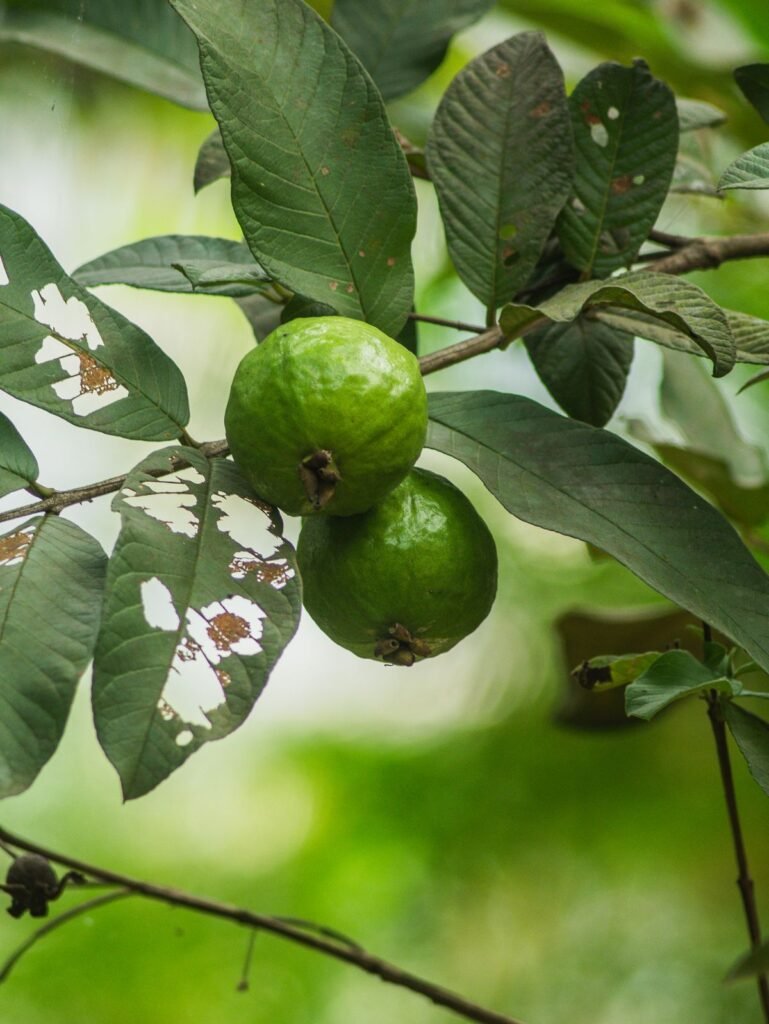
Walk past any fruit cart in Delhi, Lucknow or Indore between November and February and you will smell ripe amrud before you see it. Guava benefits go far beyond taste. This humble winter fruit carries about four times the vitamin C of an orange, more fibre than most fruits on the cart, and a glycaemic index low enough that even people watching their blood sugar can enjoy it. It costs a fraction of imported berries — wash, cut, sprinkle a little salt, and eat.
What’s Inside One Guava?
A 100-gram serving — roughly one small fruit — gives you about 68 calories, 228 mg of vitamin C, 5.4 grams of fibre, 417 mg of potassium and 14 grams of carbohydrate. That vitamin C figure is the one to remember: more than twice the daily requirement, about four times an orange of the same weight. It also brings smaller amounts of vitamin A, folate, magnesium and lycopene, the pink pigment in red-fleshed varieties. High vitamin C plus high fibre plus a low sugar load is a rare trio, and that combination is the base of most guava benefits.
7 Guava Benefits That Make It a Winter Superfood
Here are the seven guava benefits that matter most in the cold months.
1. Immunity That Holds Up Through Winter
Winter in north India means dry air, smog, and a cold that goes around the whole house. Vitamin C supports immune cells, and one medium guava covers your entire day’s need. It will not stop you catching a cold, but vitamin C is linked to shorter, milder colds.
2. Diabetes-Friendly — With One Condition
Guava is one of the safer fruits for people with diabetes, thanks to its fibre. The 5.4 grams of fibre in 100 grams slows down how fast sugar from the fruit reaches the blood, and the low glycaemic index keeps the rise gentle. A small randomised study at AIIMS Bhubaneswar found that six weeks of guava pulp without the peel improved fasting blood sugar, cholesterol and triglycerides — read the full study here. The same study found the ripe peel raised blood sugar — eat the pulp, go easy on the peel. For more fruit choices with diabetes, see our guide to what fruits diabetic patients can eat in India.
3. Digestion and Constipation
If winter means heavier food and less movement, guava is a quiet fix. The fibre adds bulk to the stool and keeps food moving at a steady pace, which is why guava has been a home remedy for constipation for generations. The seeds add fibre too, though too many can feel heavy. A ripe guava after lunch keeps digestion regular through winter.
4. Skin That Shows It
Vitamin C is not only for immunity — skin needs it to make collagen, the protein that keeps skin firm and helps small cracks heal. Winter dries the skin out, and a fruit that supplies vitamin C, water and antioxidants in one bite does real work. The lycopene in pink guavas adds extra cover against sun damage. Guava will not replace a moisturiser — for that, see our dry skin home remedies for winter — but skin fed from the inside tends to look better. It is one of the quieter guava benefits, and one of the most visible.
5. Blood Pressure and Heart
Guava helps the heart in two ways. Its potassium — 417 mg per 100 grams — helps balance sodium and relax blood vessel walls, which supports healthy blood pressure. And its soluble fibre helps pull cholesterol down; the same AIIMS study recorded a fall in total cholesterol and LDL after six weeks of guava pulp. It is no medicine and no replacement for BP tablets, but as a daily habit it points the right way.
6. Weight Loss Without Feeling Hungry
A medium guava has around 60–70 calories and takes a while to eat — you chew, work through the seeds, and feel full. That mix of low calories and high fibre is exactly what weight loss needs. Swap an evening packet of chips for a guava and water and the craving often fades. A small swap, but repeated daily it adds up.
7. Energy and Better Iron Absorption
Feeling tired in winter is common, and low iron is one cause, especially among Indian women. Vitamin C helps the body absorb iron from plant foods — dal, palak, rajma — by converting it into a form the gut can take up. A guava after an iron-rich meal raises how much iron you absorb. If low iron is a concern, our guide to iron deficiency in Indian women covers symptoms and foods.
How Many Guavas Should You Eat in a Day?
One medium guava a day — about 100 to 150 grams — gives a full day’s vitamin C, a good dose of fibre, and roughly 70 calories. Two a day is fine for most healthy adults; more can mean too much fibre and a restless stomach. To get the full guava benefits, eat it fresh rather than as packaged juice — the cartons strip out the fibre and add sugar. Eat it mid-morning or after lunch, not on an empty stomach. Cut it into slices with a pinch of rock salt or chaat masala. It pairs well with other winter foods — try sweet potato for a filling, fibre-rich snack.
Which Variety Should You Pick?
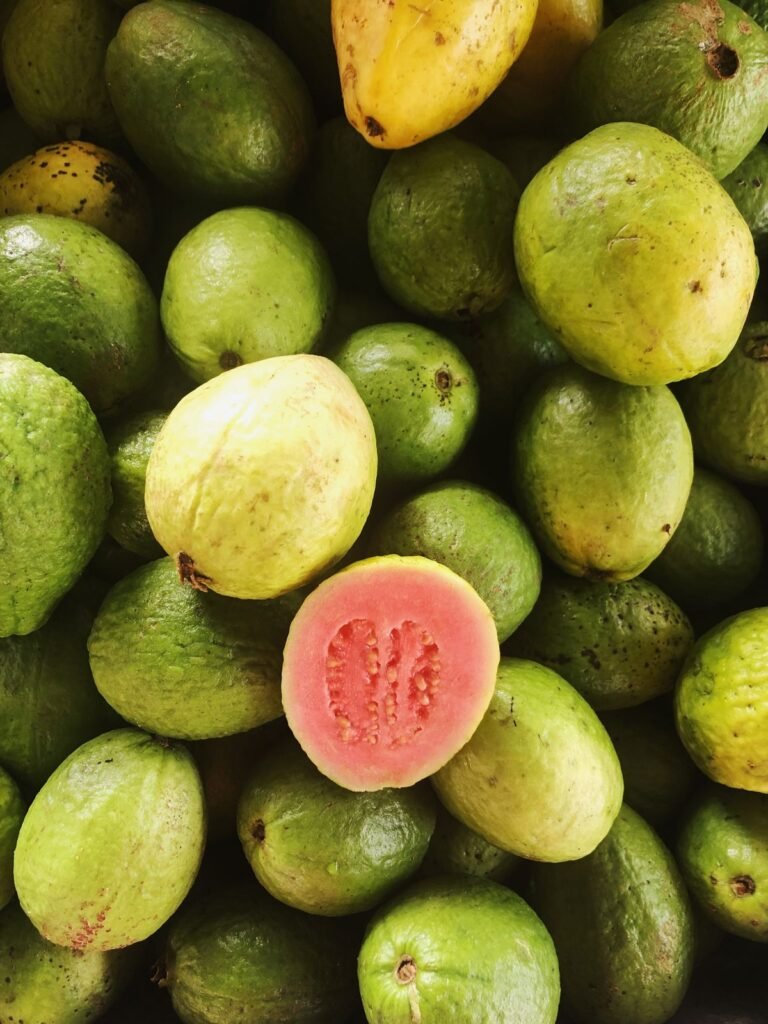
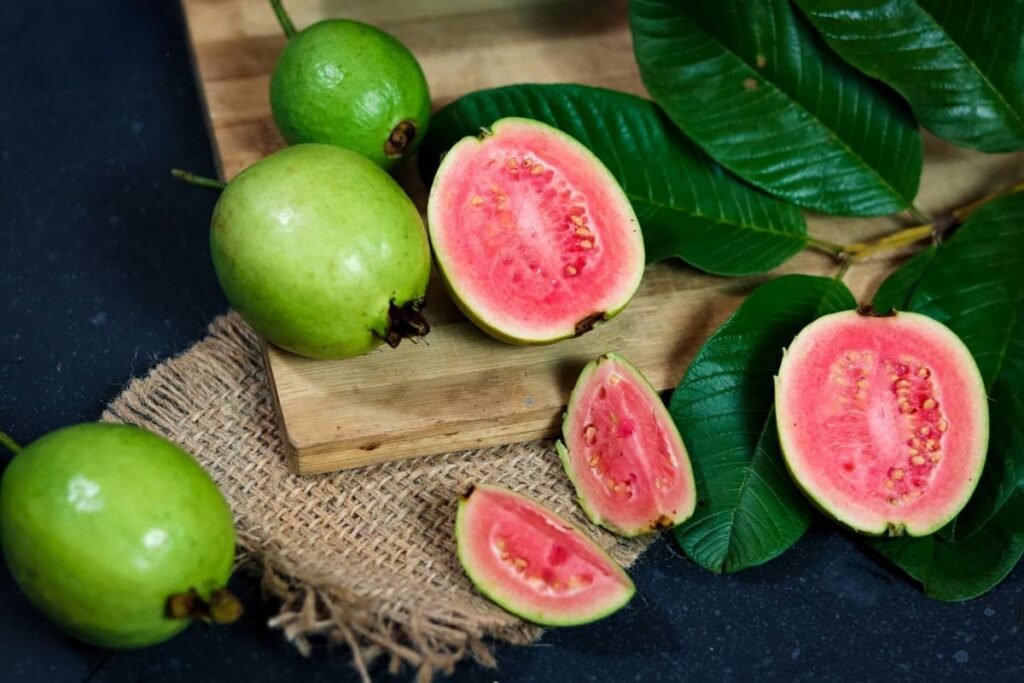
Three varieties dominate the winter market in India. Allahabad Safeda is the classic — white flesh, sweet, thin skin. Lucknow-49, also sold as Sardar guava, is larger, rounder and softer. Pink guavas have rosy flesh, a stronger smell, and extra lycopene. Pick one that smells sweet at the stem end and gives slightly when pressed; avoid dark spots or a sour smell.
Guava Leaves: The Old Home Remedy
Ask any grandmother — the leaves matter as much as the fruit. Guava leaf tea — a few clean, young leaves boiled in water for ten minutes — has been used in Indian homes for upset stomachs and loose motions for generations. Animal studies have found blood-sugar-lowering effects from leaf extracts. That is tradition, not proof: human evidence is thin, and it is no substitute for medicine. Use fresh, well-washed leaves, a cup a day. Skip it entirely if you are pregnant or on diabetes medicine without asking your doctor first.
Who Should Be Careful With Guava?
Guava is safe for most people, with a few cautions. Wash the fruit well under running water and rub the skin — pesticide residue sits on the peel. If you already have a cold or heavy cough, many find ripe guava makes the throat feel worse; skip it for a few days. Eat the seeds in moderation — a mouthful in one sitting can bloat you. If you have diabetes, remember the peel point: the pulp is your friend, the ripe peel less so, and portions still matter. When in doubt, ask your doctor.
Frequently Asked Questions
What are the main guava benefits?
The main guava benefits are high vitamin C for immunity, fibre for digestion, a low glycaemic index for diabetes, potassium for blood pressure, and vitamin C for skin and collagen. One medium guava covers your full daily vitamin C.
Can diabetic patients eat guava daily?
Yes — the fibre and low glycaemic index keep blood sugar rises gentle. Eat the pulp, go easy on the ripe peel, and check portions with your doctor if your sugar is poorly controlled.
How many guavas should I eat in a day?
One medium guava (100–150 grams) a day is right for most people; two a day is fine for healthy adults. More can cause bloating from the extra fibre and seeds.
Is guava good for skin?
Yes. The vitamin C in guava helps your body make collagen, which keeps skin firm and helps it heal. Pink guavas also contain lycopene, which protects skin from sun damage. Eating it works alongside, not instead of, a good moisturiser.
Which is the best guava variety in India?
Allahabad Safeda is the most popular for sweetness and thin skin, Lucknow-49 is bigger and softer, and pink guava has extra lycopene. Pick by taste and freshness rather than variety.
Guava asks for nothing — no cooking, no peeling, no high price — and gives back vitamin C, fibre, potassium and steady energy. Buy them at peak season, eat one a day, and let the guava benefits add up.
Disclaimer: This article is for general information only and is not medical advice. Food amounts are general guidance only. If you have diabetes, are pregnant, or take regular medicine, please consult your doctor.